The Secret $2 Trillion Market Close To Home with Sunil Rajaraman, Hamlet

Introduction
Two trillion dollars of economic activity flows through local government every year. City councils decide it. Planning commissions decide it. Public comment systems nobody attends decide it. And almost no founder will touch the market.
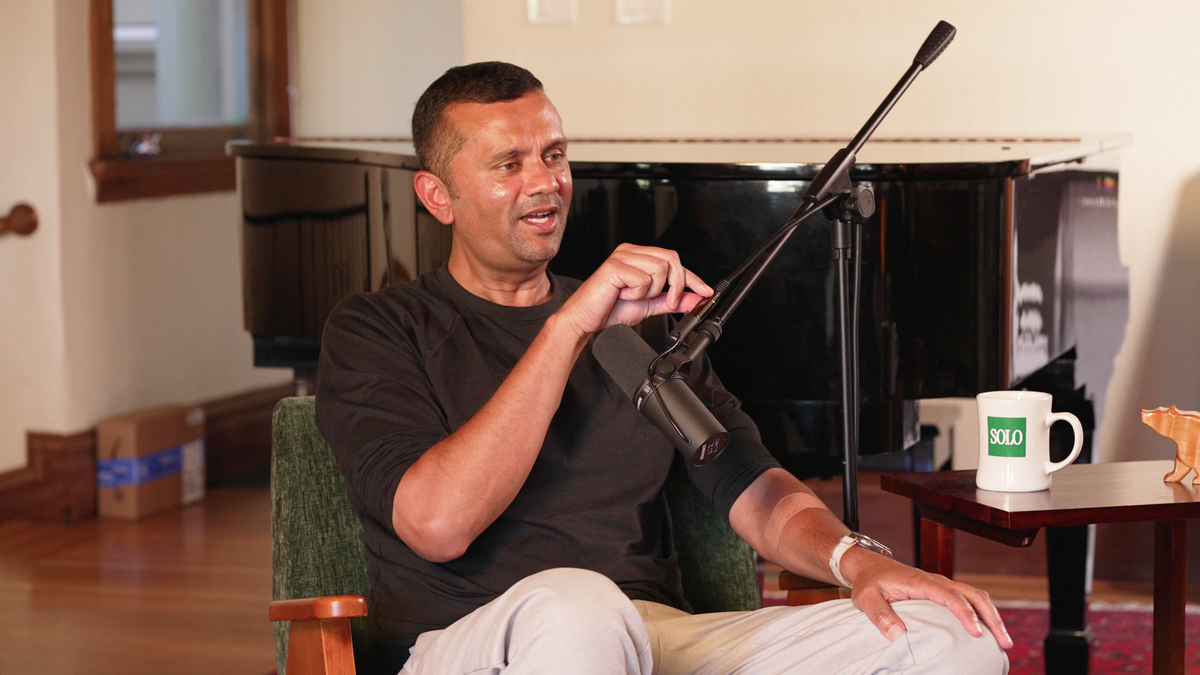
This week's guest is the rare exception. Sunil is the founder and CEO of Hamlet, the civic AI making local government meetings legible. Before Hamlet, he ran for city council in Orinda, California, in the middle of his career as a tech executive. He didn't win. He walked away with a newsletter for residents — and an obsession with how rigged the system actually is.
The conversation with Julian is the most concrete civic-engagement segment we've recorded on this show. It also happens to contain a clean founder thesis about how to spot a market everyone else is ignoring. The two are the same insight from different angles: if a market sits in a fashion blind spot, that's the advantage, not the obstacle. Most founders won't operate in a market they wouldn't talk about at a dinner party. The few who will get to own it.
The Insight That Comes From Showing Up
Sunil's actual on-ramp to Hamlet wasn't a market analysis or a pitch deck. It was the city council campaign. He approached running for office "with an entrepreneurial mindset" — walked into city hall, picked up the paperwork, collected the signatures, filed. The first thing he learned was that even in a 19,000-person nominally non-partisan town, you have to raise about $20,000 to win.
The bigger lesson came later. As soon as he started attending council and planning-commission meetings, the system's actual mechanics surfaced.
"Most decisions are made before the meeting. 90+ percent of the time, the council members just vote in sync. Most city councils are rubber-stamp organizations and we need to fix that."
Public comment, he discovered, is largely ineffective. The meetings are barely attended. Two or three people — the "local vocals," in his phrasing — show up to every meeting and comment on every issue, but they're not representative of the city. The Brown Act, the California open-meetings law that's supposed to prevent council members from coordinating, gets routed around by a "daisy chain" of one-on-one conversations. The meeting is a stage. The decisions are made before.
This is the kind of insight a founder cannot get from outside the system. Hamlet's entire reason for existing — the why now, the why him — comes from Sunil sitting in those empty council chambers and seeing what almost nobody outside the room ever sees.
Why The Market Has Stayed Open
The market is enormous. $2 trillion of GDP runs through local government every year. Real estate developers operate at the local level. Data center developers do — locating a data center is, fundamentally, a local-permitting problem, and one of the largest infrastructure decisions in the U.S. economy is being made one Planning Commission meeting at a time. Retailers look at hundreds of cities before they pick one.
So why has nobody built for it?
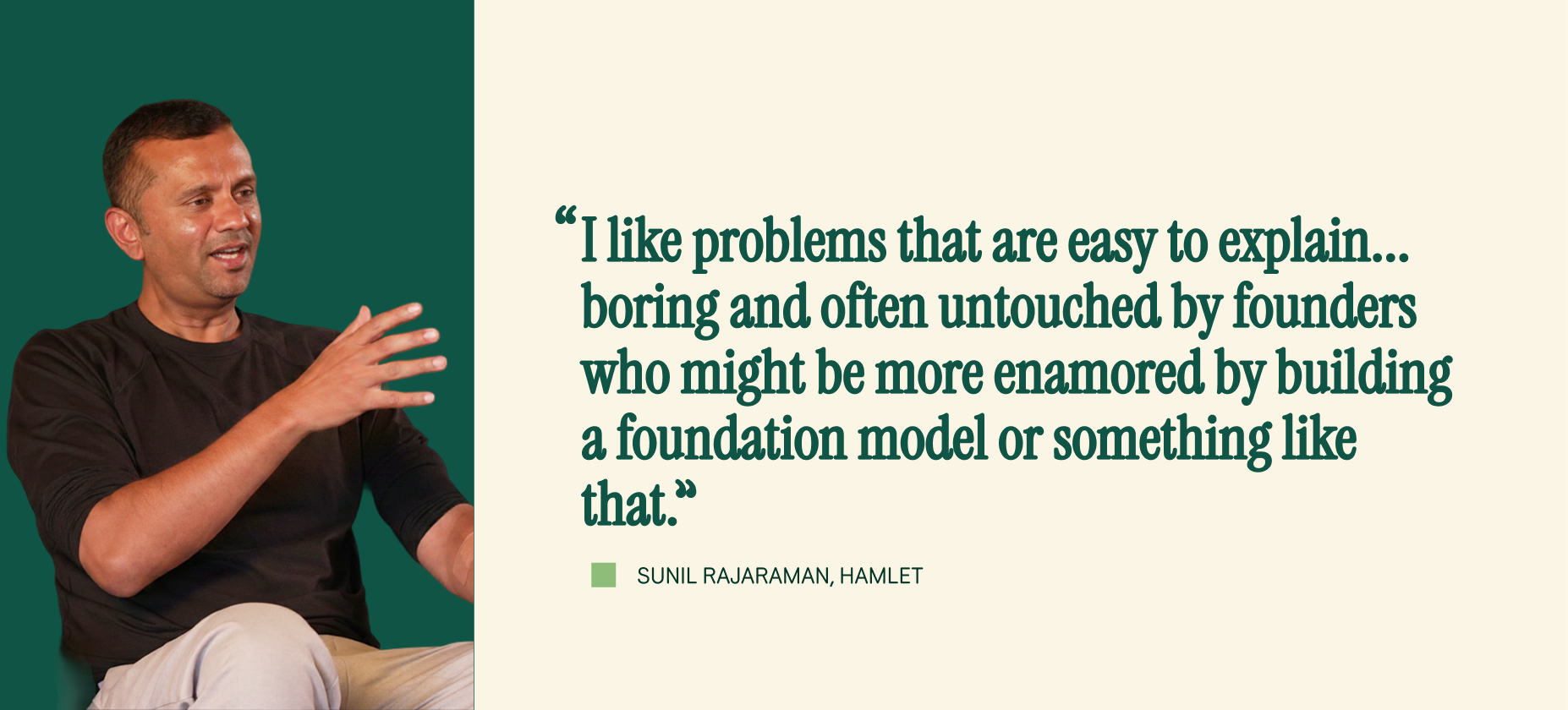
Sunil's reason is straightforward: local government sits in the founder fashion blind spot. There are no trendy local-government founders the way there are trendy AI-agent founders or GLP-1 founders. There is no SF Twitter conference panel about civic tech. The market is the opposite of fashionable in 2026, which means almost everybody capable of building for it is either ignoring it or actively avoiding it.
What the market has, instead, is a why now. Two of them. Since COVID, most city councils began recording their meetings — typically as compliance measures during pandemic-era remote operation, never reverted. So for the first time, the underlying source data exists. And in parallel, large language models became good enough to read meeting transcripts, identify the substantive content, and translate the proceedings into something a non-specialist resident or developer can use. Pre-COVID, both halves were missing. By 2024, both were in place.
Hamlet is what happens when a founder spent the previous fifteen years quietly accumulating context in this market — running for city council, building a newsletter for residents, watching a real estate developer reach out asking if Sunil could do for the planning commission what he'd done for city council — and then noticed the why now before anybody else.
The Founder Test That Generalizes
The pattern is more useful than the specific market. The same logic applies to any unsexy, contextually deep B2B vertical. Sunil's filter for what to work on, delivered as a hard line:
"If you don't have an original insight, just don't work on it."
By "original" he doesn't mean nobody else in the world is working on it. He means you have to have a take on the industry or problem that nobody else has, accumulated from somewhere — your work history, a personal experience, a parallel obsession. He has watched two complete startup eras now (Scripted in 2011, Hamlet today) cycle through the same archetype: the founder chasing whatever is trendy this year, freelance economy then crypto then a two-person AI-GLP-1 company. Almost none of them make it. Original insight or don't bother. Niche obsession or don't bother. The tests are the same test.
The flip side is what Sunil calls the "easy-to-explain business." Not easy to build — easy to explain. The Federer analogy: he makes everything look easy because he's spent decades accumulating context that doesn't show up in any one rally. Same is true for an "easy-to-explain business." The pitch is one sentence. The reason it's actually achievable is twenty years of muscle memory the deck doesn't show.
What To Do About Your Local Government
The minimum bar is voting in down-ballot elections. Only about 20% of voters do. The next step up is joining a commission — Parks and Rec, Planning, Library, Traffic. These are appointed positions, not elected ones. You fill out a one-page form, the council interviews you, and if you're competent you serve. Three or four hours a month. Sunil joined a commission himself for several months and recommends it as the cleanest civic-engagement on-ramp available.
The honest reason most people don't is that local government feels too opaque to participate in. That opacity is exactly the problem Hamlet is built to solve — but the personal version of the problem precedes the product version. Even without Hamlet, paying attention is the entry point.
The Founder Texture
There is a whole second episode inside this one — Sunil's tactical playbook for building in a vertical you've never sold to before. Front-loaded advisor relationships, contract-to-hire as the default for technical hires, pricing humility ("I'd give myself a C-minus, D-plus — and I don't know any founder who'd say otherwise"), and the leadership rule: "I always assume that my first reaction will be an anger reaction, so I let things simmer and wait."
The bear case for solo founding is sharp. Sunil names something most founders won't say out loud — resentment toward the team builds quietly because no one cares about the problem at the same intensity as the founder, and the discipline is to write things down and let them simmer rather than reacting in the moment. The bull case is the line that closes the episode.
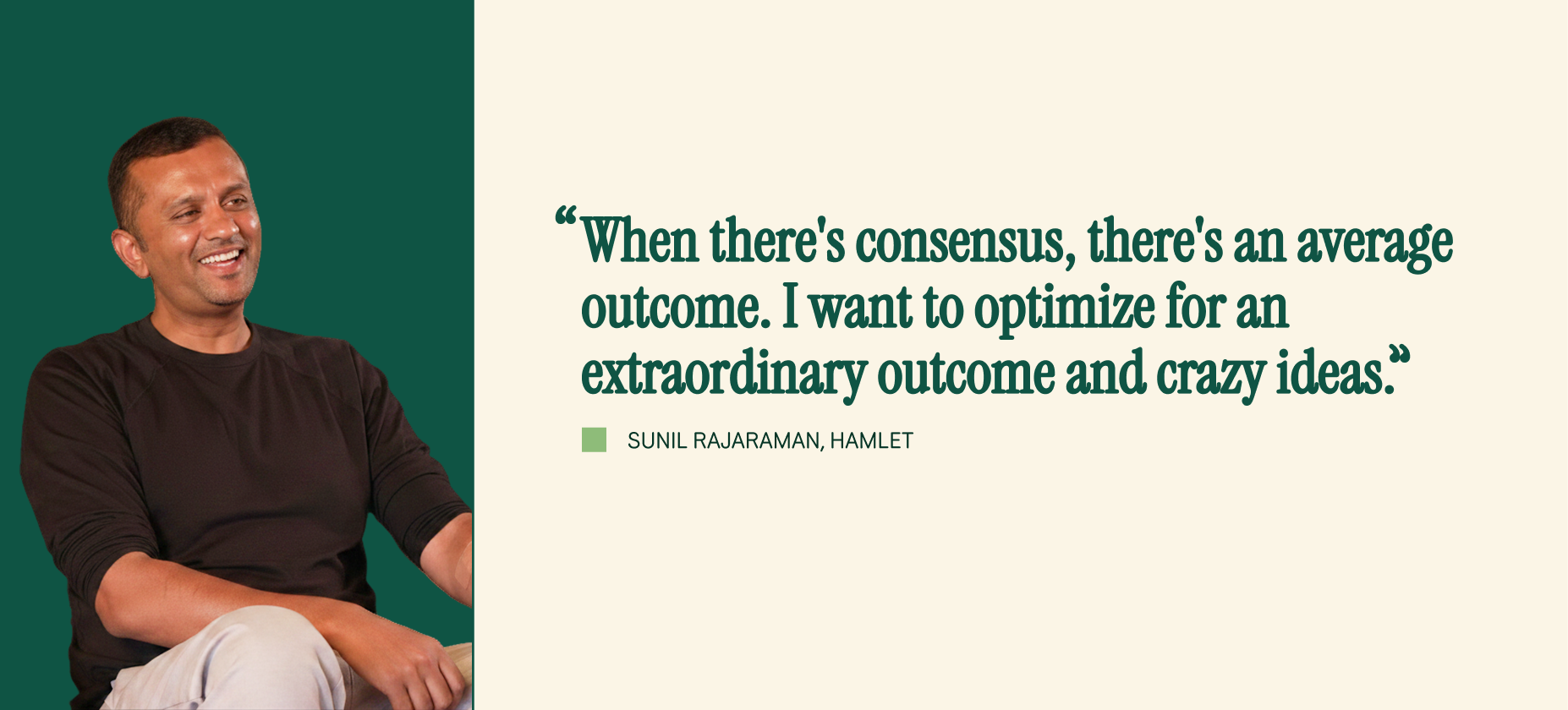
About Sunil
Sunil is the founder and CEO of Hamlet, the civic AI making local government meetings legible to residents, real estate developers, data center developers, and governments themselves. After running for city council in Orinda, California, he saw firsthand how opaque local government is and built Hamlet to fix it. Before Hamlet, Sunil co-founded Scripted (a freelance writing marketplace backed by Crosslink Capital and Redpoint Ventures), served as an entrepreneur in residence at Foundation Capital, and was an executive at GoodRx through its IPO. In parallel, he led the team that purchased The Bold Italic from Gannett, revived it, and sold it to Medium — and along the way wrote "This Is Your Life in Silicon Valley," a satire that generated millions of views and got him interviewed by Kara Swisher. Crosslink, his original Series A investor at Scripted, came back to back Hamlet a decade later.
Subscribe to the Solo Founders Podcast on YouTube, Spotify, or Apple Podcasts.
Join our newsletter for weekly insights from solo founders.