How to Bootstrap a Startup to $9M ARR.
Yasser Elsaid's (solo founder of Chatbase) guide to sales, pricing, content, margin analysis, and more for startups.

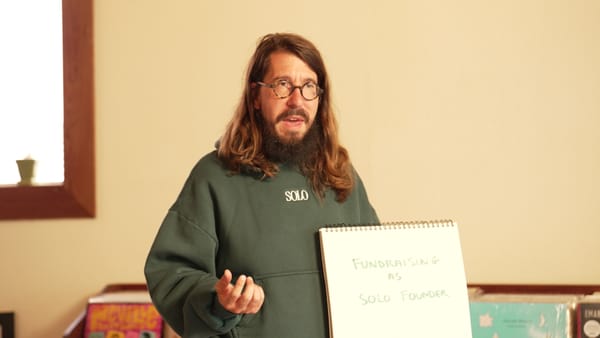
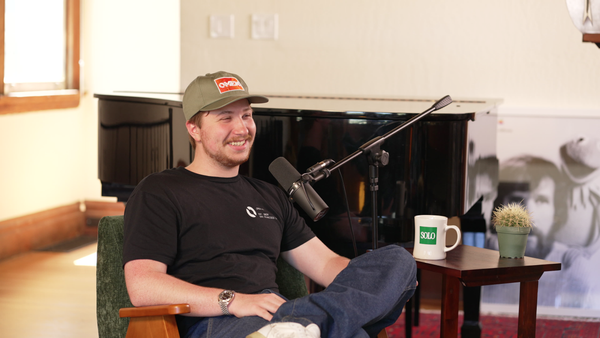
Yasser Elsaid bootstrapped Chatbase, a platform for building AI support agents, to $9M ARR in three years with no outside funding. In a recent conversation on the Solo Founders Podcast, he shared his playbook.
The core principle is that you need something repeatable and scalable. Something where every dollar you spend turns into more on the other end. Here's how he built that.
If you're in B2B, just do the B2B stuff.
"A lot of people value talking to humans, getting on sales calls, understanding the product, and making sure there are humans behind this. That's the only way you can continue to grow past a certain point."
A lot of bootstrapped founders try to force their B2B business to run like a consumer app because customer acquisition is cheaper that way. Yasser did the same. For most of its life, Chatbase was fully self-serve. He didn't add a sales team until they were at $7-8M ARR (about six months ago), and he says that was later than it should have been.
The reality is that you're talking to a middle manager at a public company. That person won't spend a week on your dashboard trying to make it work, even if your product is intuitive. They want a call to understand the product and have someone set it up. That's why bigger companies lead with "book a demo."
Bootstrapped founders should first build momentum with self-serve customers, then layer in sales quickly. Get on demo calls, set up the product for bigger customers, and invest in building an intuitive platform. Do both.
Content is non-negotiable, even if you're sales-led.
"Organic content makes everything else easier. It makes paid ads easier because people know your brand. It makes outbound easier because they have seen you before."
Content compounds everything. When people recognize you, paid ads convert better. Cold outbound gets warmer when prospects have seen your posts. Yasser breaks it into two categories:
Video: product and customer videos. No stunts, office content, or random skits. Those can work, but only after you've done the things you know will work. Hire an in-house videographer. Agencies are expensive, and the barrier to entry for good video is high, which is exactly why it signals that you're a serious business.
Personal brands: everyone on the team should be posting. Employee-generated content is essential. Each person should post at least twice a week.
Warm outbound is the lowest-hanging fruit.
Warm outbound means reaching out to people who have seen your product. This includes those who interacted with your LinkedIn posts, visited your site without signing up, or created an account but never finished onboarding. They're already familiar with your brand. Email, call, or put them into a sequence until they convert. Set clear KPIs for your team on this.
Cold outbound works if your TAM is large enough.
"It becomes a numbers game -- how much you're doing, how much you're willing to spend. It's just a formula at the end of the day -- CAC to LTV."
Customer-facing AI agents are a massive market, so it makes sense for Chatbase to use cold outbound. Build the system in-house. Send emails profitably, and if it works, send more. Scale it until it stops making sense. Yasser says the best companies combine what has always worked in B2B sales with what works in B2C growth — a strong organic motion with a sales layer on top.
Pricing is the fastest lever.
"You can just change it and immediately see feedback from the market. You can't say the same about other efforts."
There's no science behind pricing. Yasser consumed all the content, talked to many founders, and the conclusion is the same: experiment. Set a price, see the reaction, and adjust. That's it.
The feedback loop with pricing changes is unique. You know immediately whether it's working or not. You can't say that about content, outbound, or product changes. Many founders don't realize their pricing is too low or too high and end up losing customers. The fix is to experiment more aggressively and frequently.
Margins don't matter at the beginning.
"It's much easier to cut costs than to get more customers and revenue."
This is counterintuitive, especially for bootstrapped founders who prioritize profitability. Yasser was the same way; he admits that being too conservative early on slowed him down.
His point is that if you have a $10M ARR business and spend $10M to run it, that's fine. You can always cut costs. Revenue is the most important metric. That $10 in revenue signals a new customer who talks about you, more brand awareness, and more money to reinvest. Revenue compounds in ways that cost savings don't.
Yasser says Chatbase is now spending more than many VC-backed companies because they have years of profit saved up and clear conviction on what to build. "Once you have that conviction, you can be more aggressive. You can even start to increase burn a bit." The shift from conservative to aggressive is a function of conviction, not funding.
Be friends with your biggest customers.
"When you have one customer in one industry who loves the product and can't stop talking about it, you get more customers from that industry."
Your biggest customers are often executives and founders who have faced the same problems. They have insights for you, and you have insights for them. It's easy to find shared understanding. But most founders treat their customers as revenue, not as a community.
Get on calls with them. Know them by name. Give them your number. When one customer in an industry loves the product and can't stop talking about it, you get more customers from that industry. Word-of-mouth from a real user beats any marketing channel. Yasser says this is an undervalued growth lever.
Yasser covers more learnings from his journey scaling Chatbase to $9M ARR on the Solo Founders Podcast. Listen on YouTube, Spotify, Apple Podcasts, or watch on X.