She's Fixing America's Talent Problem | Minn Kim, Lighthouse

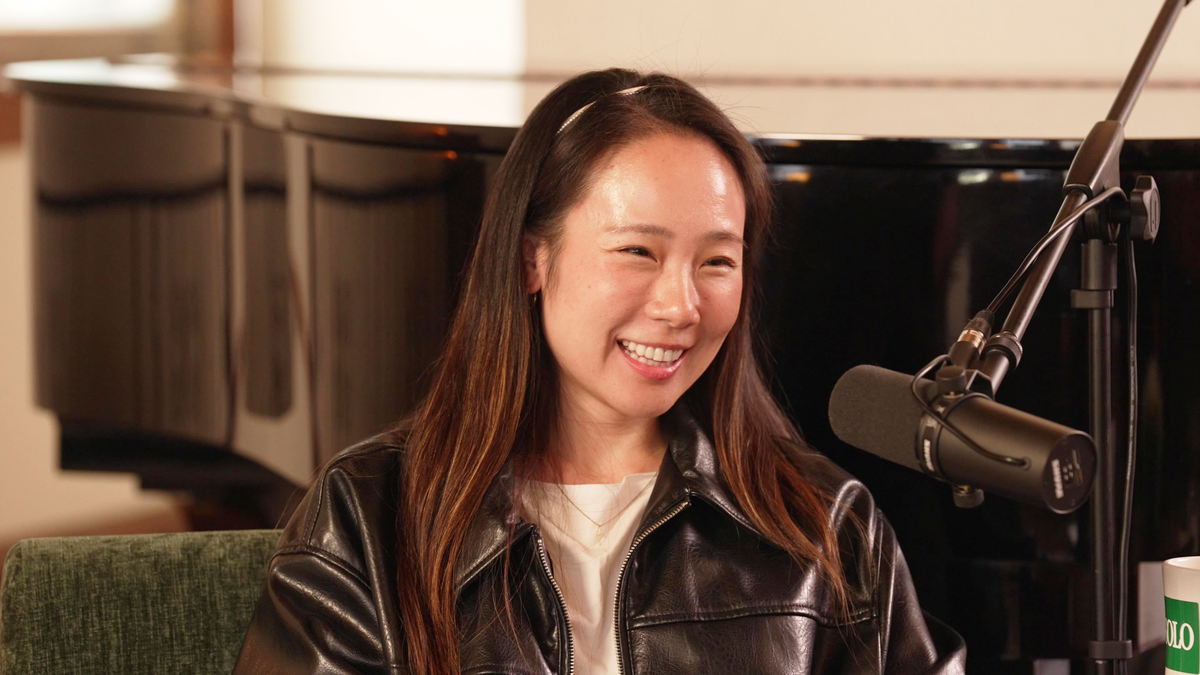
Introduction
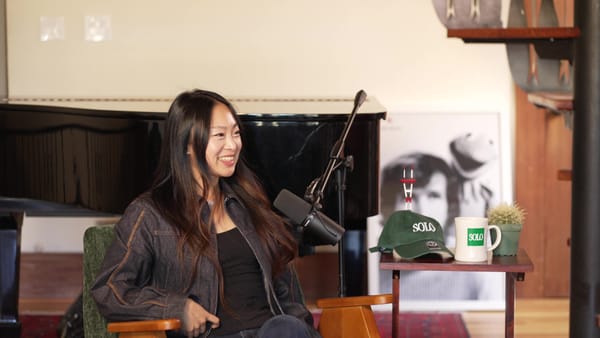
By the time Minn Kim sat down with Julian to talk about Lighthouse, she had quietly become the person an entire generation of frontier-tech founders calls when they need to bring someone into the United States. She is solo. She is not a lawyer. The first two people she hired were engineers, not paralegals. And the company she built — an AI-powered immigration firm that delivers end-to-end work-visa engagements in roughly half the typical timeline at six figures a pop — was not designed by any of the conventional rules. Minn herself had never been through the work-visa process when she started the company. She isn't an attorney. She doesn't have a co-founder. None of those facts occurred to her as obstacles, because none of them were ever on her checklist.
The conversation with Julian is the rare founder origin story where the protagonist solves somebody else's problem — and frames that as the strength of the company rather than its weakness. Minn came up at an AI-focused early-stage venture fund in 2017, then ran talent at a Covid-era startup where she read thousands of applicant profiles from every corner of the world. The pattern that kept surfacing wasn't a question about pay or product or ambition. It was the same five words: how do I get a visa? In 2022 she started helping friends one Zoom call at a time at a few hundred dollars an hour. By 2023 the LLM moment was strong enough to start automating the paralegal work she had taught herself. The result, two years later, is Lighthouse — and the episode is the clearest articulation we have had on the show of what the AI-era hiring war actually looks like from the inside.
"Twenty Of Them In The World"
The clearest image in the conversation arrives almost an hour in, when Julian asks Minn to describe what Lighthouse is actually doing for the companies that hire her. She picks a hypothetical that is barely a hypothetical at all.
"If you're a frontier company solving really advanced technology problems, you want the very best people. Oftentimes the very best person is this niche semiconductor engineer in, like, Australia. There are only twenty of them in the world."
The visa is not the bottleneck because the visa is hard. It is the bottleneck because the typical visa process turns weeks of urgency into months of paperwork, and frontier-tech companies cannot replace the people they are waiting on. Lighthouse's pitch — and the reason it sustains six-figure end-to-end pricing — is that those months get compressed back into weeks. That is not a services business in the legacy sense. That is talent infrastructure.
Minn frames the mission in those words, more or less verbatim: we are building talent infrastructure for today's frontier companies and for the technology industry tomorrow. The frame matters. A services firm scales by adding people. Talent infrastructure scales by writing the workflow down as software — and, importantly, by writing it down so accurately that the human operators on top of it are doing higher-leverage work, not the same paralegal collation that used to clog the email thread. That is why the first two hires at Lighthouse were engineers, not lawyers. The moat is the workflow software. The lawyers are partners.
Solve Someone Else's Problem, And Never Ask Permission
The cleanest contrarian moment of the episode is when Minn names her single largest violation of received startup wisdom: she did not have the problem she is solving. She is an immigrant — she came to the US as a child on a decade-plus family journey — but she had never been through the work-visa process herself when she started Lighthouse.
"I was actually really insecure about starting Lighthouse because I'd never gone through a work-visa journey myself. It took me time to recognize that what matters to me and what motivates me a lot is that I just genuinely love my customers."
This is a direct contradiction of solve your own problem, the most-repeated piece of founder advice on every accelerator stage. Minn's counter-claim is that loving the customer is a stronger motivation than having the pain. Both work. They are not the same fuel. Her career has been built around supporting founders — as an investor, as a talent operator, as a community builder — and the decision to become the founder was the last permission she had to give herself. It was also the only one that ever required her to ask.
The bull case arrives at the end of the conversation, almost as an afterthought. Julian asks the customary closing question — what's the case for solo founding? — and Minn responds with the most quietly devastating answer we have had on the show.
"I think everyone should consider it. It literally didn't cross my mind that I shouldn't build Lighthouse. Truly. At the beginning, it was sort of a — well, I have to do this. I don't have an option right now to have a co-founder. So I'm just going to have to do it. That is a resource that isn't available to me. And it wasn't a blocker. If that's true for me, then — I know so many smart people. It is not a required ingredient to be able to solve a problem that you care about."
The reason this lands harder than any single rebuttal of co-founder orthodoxy we have heard is that Minn is not arguing. She is reporting. The default-flip — the thing you thought was required is just a thing you assumed — happened to her not as the result of an ideological commitment, but as the result of an absence. She did not have the option to find a co-founder. She did not run a decision-theoretic analysis. She just got going. The company is now a thousands-of-cases-deep visa platform with engineers on staff and six-figure engagements on the books. The proof is built.
Complicated vs. Complex Problems
The framework Minn keeps returning to is one of the rare original tools we have heard on the show. There are complicated problems and complex problems. The two words are conversational synonyms; they are operational opposites.
"I am not the right person to solve complex problems. I am a good person to solve complicated ones. Complicated problems have a point A and a point B, and point B is known. Complex problems don't know what point B looks like."
Uber, Tesla, DoorDash, and Amazon are complicated problems: the end-state is obvious (move a car, ship a package, get someone a meal, deliver everything to everyone), and the entire game is operational excellence against a known target. Biotech R&D, AGI, and Conception's stem-cell-to-egg moonshot are complex problems: the end-state is unknown, the timeline is open-ended, and the capital structure has to be patient enough to survive that the answer might be a decade away. The mistake most founders make, according to Minn, is failing to ask which kind of problem they are actually trying to solve — and then either picking the wrong capital structure or, more commonly, picking a problem they are temperamentally and operationally unsuited for.
Lighthouse is a complicated problem. The point B (get the right person into the right US company on the right visa as fast as legally possible) is known. The game is operational excellence. Minn is a complicated-problems founder, and the company is a complicated-problems company, and the matching of founder shape to problem shape is the part most founders never explicitly model.
Long Games
The other framework worth pulling out of the conversation is Minn's hiring playbook, which she names long games. She keeps a rolling short list of five to ten people she would hire instantly if the timing worked. She does not pressure them. She invites them to dinners, to cohorts, to project work. She lets them go start their own companies. She keeps in touch.
"Long games. I'm a big believer in them. There's always a short list of five, ten people, and you're like — if I could have the opportunity to work with these people, absolutely."
The contractor-to-full-time pattern (a recurring theme on the show, also discussed by Paul Klein IV on ep02) is the operational expression of long games. Two-week work trials. A weekend on a project. Show people under the hood. Once a candidate has seen the inside of the company — the cultural defaults, the way decisions get made, the way feedback gets handled — they either know it is for them or they know it isn't. Either outcome is a win. The bad outcome is hiring someone who has never been inside the company and finding out, six months in, that the fit was never going to work.
This is how Minn made her first two engineering hires at Lighthouse — both friends-of-friends, both starting as contractors, both deeply trusted before there was ever a full-time offer on the table. The pattern was deliberate. It was also slow. It paid for itself.
The episode is what it sounds like when the permission ritual gets skipped, and the company that gets built on the other side is the receipt.
About Minn Kim
Minn Kim is the founder and CEO of Lighthouse, the AI-powered immigration firm building talent infrastructure for frontier-tech companies and their hires. She immigrated to the United States as a child on a decade-plus family journey from South Korea, spent her early career at an AI-focused early-stage venture fund (2017), then ran talent at a Covid-era startup where she read thousands of international applicant profiles. After watching the visa system fail capable people — including her closest friends — she began consulting on visa journeys at a few hundred dollars an hour in 2022, learned to operate as an effective paralegal, and in 2023 saw the LLM moment clearly enough to start automating the workflow at scale. Lighthouse today delivers end-to-end work-visa engagements in roughly half the typical timeline and works alongside the Solo Founders program as the active visa partner for solo-founder cases.
Subscribe to the Solo Founders Podcast on YouTube, Apple Podcasts, or Spotify.
Join our newsletter for weekly insights from solo founders: https://solofounders.beehiiv.com/
Apply to the next Solo Founders cohort: solofounders.com/apply