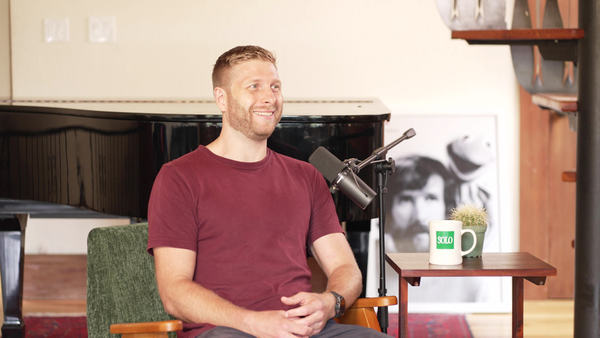
4 Co-Founder Breakups. $40K Left. Then He Went Solo. | David J. Phillips, Fondo

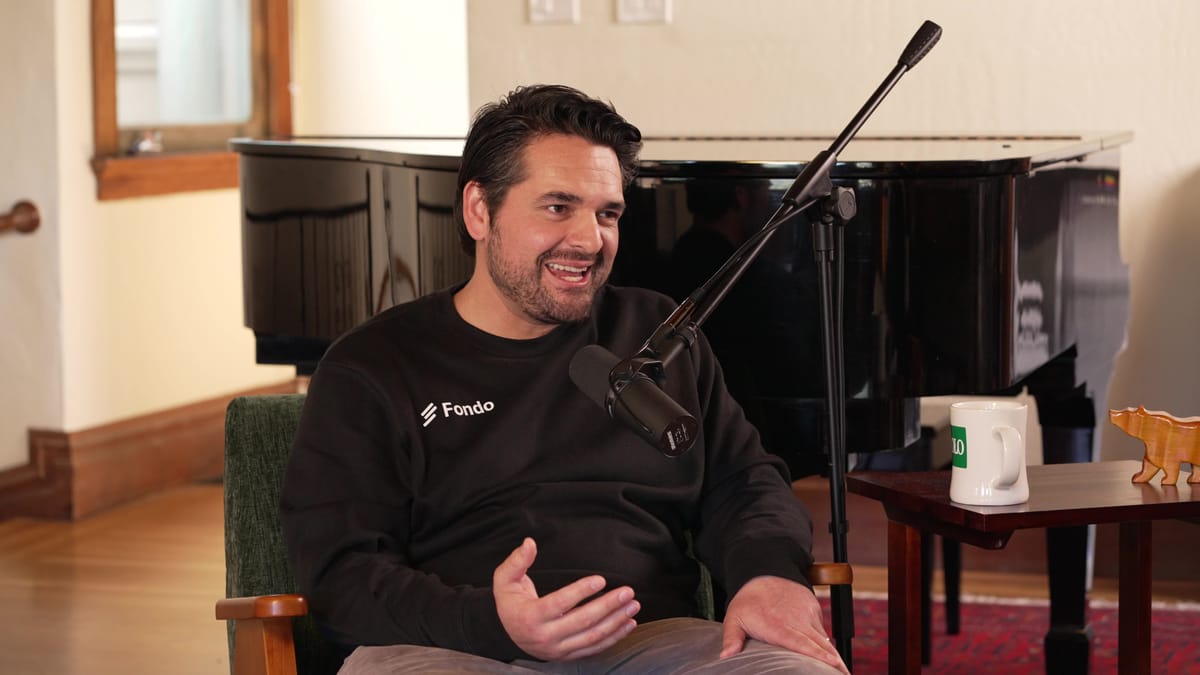
Introduction
By the time David J. Phillips refounded the company that became Fondo, he had been through four co-founder relationships across four different startups. The first one ended when he and his college co-founder moved to different cities and quietly built two separate companies doing the same thing. The second ended when his hackathon-partner-turned-CEO fired him six months in, less than a year past the seed round. The third was the coding bootcamp Hackbright — a co-founder who left a couple of years before its eventual acquisition. The fourth was Bloom Joy, the venture-backed startup that raised a million dollars, ran out of runway during what was supposed to be a clean acquihire, and never closed the deal.
When Bloom Joy stalled, the buyer had already absorbed the team and the customers. The stock-purchase agreement got hung up on the definition of an earn-out and never closed. David and his co-founder, after months of negotiation, looked at each other and said: we're not doing the deal, and we're not suing them. It's over.
The company had $40,000 left in the bank. He decided to refound it alone.
That's the version that became Fondo — the accounting and tax platform now used by hundreds of YC and pre-seed companies, the bookkeeper inside what is arguably the most opinionated founder cohort in the world. The conversation with Julian is partly a forensic walkthrough of what happens when your runway and your team run out at the same time, and partly the playbook for what to build, who to call, and how to email your investors when you decide to keep going anyway. It is the most lived-in account we have had on the show of the moment most founders are taught to avoid talking about.
The Co-Founder Graveyard
There is no neutral way to say "I have been through four co-founder breakups" without it sounding like an indictment. David's framing is the opposite: the breakups were the data. Each one taught him something specific about why the partnership wasn't going to work — geography, role mismatch, vesting structure, idea fit — and over a decade of trying, the data converged on a hypothesis he was finally willing to test.
The pattern that's worth pulling out is the false-start solo. When David finally tried to start a company alone, before Bloom Joy, the anxiety hit almost immediately.
"I started solo and then quickly got a lot of anxiety building. I was like — I don't know if I can do this without a co-founder. I got into YC and was feeling the pressure to build something really quickly and grow really quickly. And I decided to bring on two co-founders."
He spent two years on Bloom Joy with those two co-founders. The company didn't work. When he refounded as Fondo, he refounded alone — and the anxiety of that first false-start solo turned out to have been the wrong anxiety. The actual problem had never been "can I build this without a co-founder?" It had been "do I have a problem I am the deepest domain expert on?" The answer, until Fondo, had been no.
This is the under-discussed part of co-founder breakups: most of them are downstream of an idea problem, not a partnership problem. David is one of the rare founders willing to walk through the data set live.
The $40K Filter
The refounding decision was not romantic. It was a constraint. With $40,000 in the bank and the existing cap table to honor, David ran every idea on his list through a filter with four questions.
"Which of these ideas can I do solo? Which can I get off the ground without raising more than the $40K we have? Where am I really the domain expert and can empathize with the customer? Which one has the highest likelihood of working without raising money?"
Fondo came to the top. David had trained as an accountant at Deloitte. He had run accounting in-house at every prior company he had built. He had personally lost track of his own runway at Bloom Joy — as an accountant — and watched the company starve on the back of bad bookkeeping. The $40K filter forced a constraint that surfaced an idea he had been adjacent to for almost twenty years and had somehow failed to see.
The Bezos heuristic is the right frame here. Most founders pick ideas based on what's changing. David, on the second try, picked an idea based on what would stay the same. Bloom Joy had been a marketing platform for large Facebook pages — built on top of a year of emergent, recently-acquired domain knowledge that Facebook's terms-of-service team killed in a single update. Fondo was the inverse: a problem so unkillably permanent that it has been a cost line on every Delaware C-corp since the format was invented.
The Mini-Product Wedge
The most actionable segment in the episode is the story of Fondo's first ten paying customers.
David had assumed, after closing Sam Parr at The Hustle as Fondo's first customer at $6,000 a month, that he had cracked the model. Fifteen more of these and we hit a million dollars in ARR. He went to all of his founder friends. Nobody signed up.
"No one signed up for like three months. All my friends had bookkeepers already, or chose a competitor over us because we were so new. And I thought — oh man, I don't need 15 more customers. I need way more, way smaller."
The pivot from mid-market to early-stage came with a wedge. A friend complained about Delaware franchise tax. David realized that every Delaware C-corp had the same complaint. He posted on YC's Bookface forum offering to file Delaware franchise tax returns for free. A hundred companies signed up. He filed all of them. Then he pitched those hundred on bookkeeping. Ten of them converted.
This is the same pattern David had run a decade earlier at Hackbright. The bootcamp had launched on Hacker News, hit the front page, and gotten exactly one applicant. Demoralizing. The team pivoted to volunteering at local meetup groups and teaching code for free, and that's where the first paying students came from.
"The best way to build trust is adding value. The best way to get people to let you help them is to do it for free."
The mini-product is not a marketing tactic. It is a trust mechanism for a buyer who has no other reason to believe a brand-new company will deliver. It is the cheapest credible signal an early-stage founder can manufacture.
Bear Case, Bull Case
The bear case David makes for solo founding is intentionally honest.
"It's just really hard. Why make it harder?"
When you launch and no one signs up, who do you commiserate with? When you can't solve something, who do you bounce ideas off? "When things go bad — which happens 99% of the time — having a partner on the journey just makes it slightly less hard." This is the most pro-co-founder line in the episode, and it is delivered by the founder who tried four of them.
The bull case is the inversion. Hard mode produces hard founders.
"Do things on hard mode. Why should you make it any easier for yourself? You learn more when it's harder. To be a successful founder, you have to be relentlessly resourceful — and when you're a solo founder, you're forced to be even more resourceful."
David's argument is not that going solo is easier. It is that the resilience compound from getting through the lows alone is itself the moat. Solo founders who survive the first eighteen months come out the other side with a kind of tested resourcefulness that co-founder pairs, who can split the emotional load, structurally don't develop.
Your Co-Founder Lives in Claude Now
The closing argument is the line the episode has already started traveling on. When Julian asked David what they should have talked about and didn't, David's answer was that the bear case for solo founding got materially weaker between the time he refounded Fondo and now.
"Everyone has a co-founder in their pocket now — with Claude or ChatGPT. Building has become so much more possible. Bringing things to market can happen so much faster."
The implication is structural. Default co-founder, in David's read, has always been a hedge against three specific problems: technical capacity, accountability, and someone to bounce ideas off. The first two are now solvable with software. The third is the only one a real co-founder still meaningfully provides — and the bar for taking on a co-founder just for the third one is dramatically higher than what most founders apply.
"Default co-founders happen when you don't want to do the hard thing. It's harder to go alone. And I think it's becoming less hard."
Which means: if you find yourself reaching for a co-founder in 2026, the question is no longer "is this person right?" The question is which of the three things am I actually trying to solve, and is this still the cheapest way to solve it? In David's experience — four breakups, one refounding, one company that finally worked — the answer for the technical and accountability legs is now no.
"Now you can literally do any idea that you want. There's no excuse."
About David J. Phillips
David J. Phillips is the founder and CEO of Fondo, the accounting and tax platform built specifically for venture-backed startups. Before Fondo, David trained as an accountant at Deloitte and spent the better part of a decade trying to make co-founder relationships work — across a college tutoring marketplace, a hackathon-winning seed-funded startup that fired him six months in, the coding bootcamp Hackbright (eventually acquired), and the venture-backed Bloom Joy, which raised $1M, ran out of runway, and lost an aquihire mid-negotiation. With $40,000 left in the bank, he refounded the company as a solo founder, pivoted into accounting for startups, and built Fondo into the category-defining startup accountant — used by hundreds of YC and pre-seed companies, run alongside his brother Dylan on the team. He is also one of the original solo founders Julian worked with through On Deck, where the two first met in 2020.
Subscribe to the Solo Founders Podcast on YouTube, Apple Podcasts, or Spotify.
Join our newsletter for weekly insights from solo founders.
Apply to the Solo Founders cohort at solofounders.com/apply.