Our First Guest Is Back: $1.5M to a $20M Run Rate in Seven Months

Key Takeaways
- Seven months, $1.5M to a $20M run rate, still one founder. Ben was this show's first guest when Polsia was about two months old. He came back past a $20M run rate, with $30M raised at a $250M valuation, and no co-founder.
- Co-founders of convenience stall companies. Ben raised on a deck with a CTO and a CMO, then watched them debate instead of decide: "It's worse to not take a decision as a company than to make a mistake."
- The technical co-founder is now AI. Hiring an engineer would mean explaining what to build so they could "prompt Claude Code to build it, versus me directly prompting Claude Code."
- Solo doesn't mean doing every task. Ben brought in a marketing agency and a vendor's forward-deployed engineers. He cared about the solo narrative at first; now he cares about the product.
- Every step loses people. Polsia's customers include plenty of 40-plus career-switchers and at least one 17-year-old. Remove the setup steps and a $20 customer says, "I'm a founder."
- Try solo first. "Finding a co-founder is not building. It's like trying to find a friend to work with… It's like do it tonight."
Listen: Apple Podcasts | Spotify
Introduction
In March, Ben Cera was the first guest on the Solo Founders Podcast. Polsia was about two months old and had just crossed $1.5M in annualized revenue. He built it alone, with AI doing most of the work a team would.
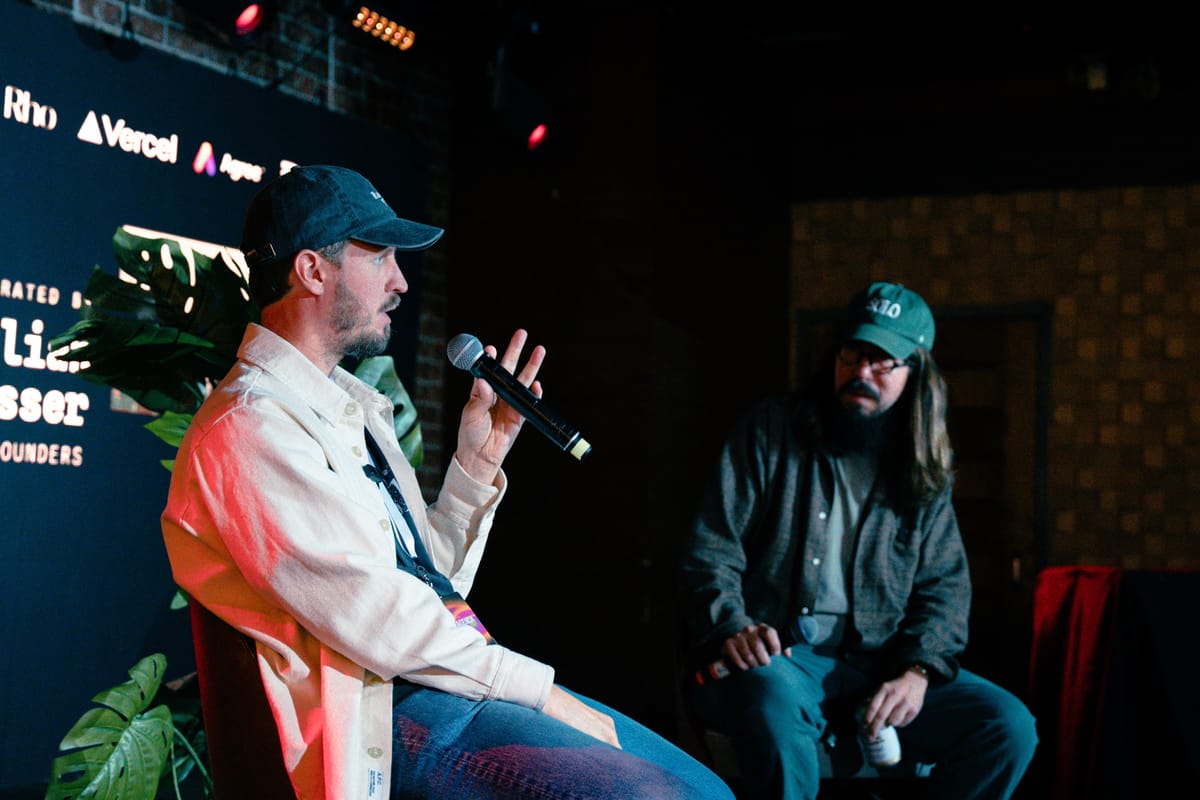
About seven months later, Polsia had passed a $20M run rate, by Ben's own count, and it had raised $30M at a $250M valuation. When Ben came back, this time on stage with Julian at the Outliers Summit in New York, Julian called it "one quarter of the way" to the one-person billion-dollar company. The number of founders hadn't changed. It was still one.
Some things hadn't changed either. Partway through the conversation, Julian turned to the room with a quiz. "Does anybody know what Polsia is backwards?" Someone in the audience had the answer: AI Slop. Ben named the company that on his couch at 11 PM, six months before he built the product, because his lawyer needed a name for the C Corp. "Doesn't matter. I think it's cool." In six months, no customer complained about the name. "Nobody cares, except for trolling purposes on Twitter."
The growth is the headline, but Ben spent most of the hour on something else: what a founder actually needs before starting, and what they don't.
The Co-Founder He Brought On to Raise Money
Polsia is Ben's sixth company. The ones before were mostly built with teams, and the one right before it started the conventional way: a deck, a raise, a CTO and a CMO "from really good backgrounds." The order was backwards. He had the funding before he had a working relationship. "Then I realized that actually my two co-founders were debating all the time."
The CTO had come from a logic plenty of founders absorb: investors will ask, so you'd better have one. Ben picked a college friend who was "super smart," and only later learned "he really wanted to debate." The company stopped moving. His conclusion is less about that person than about decisions:
"It's worse to not take a decision as a company than to make a mistake."
Most decisions, he said, are two-way doors.
Julian, who spent years helping people find co-founders before focusing on solo founders, put a name on the pattern. "Co-founders of convenience are the types of co-founders that kill businesses. They're co-founders that people bring on because they think they need to have co-founders." Ben's test is blunter. Co-founding is like getting engaged: "Would you get married with them?"
The Technical Person Is AI
The usual counterargument is that a non-technical founder needs a technical one. Ben thinks that argument has expired. "Now it's like, well, the technical person is AI. So it's fine."
He applies the same logic to hiring. Every time he's considered bringing on an engineer, the math has come out the same way:
"I would have to explain to that engineer what to build. And then they would prompt Claude Code to build it, versus me directly prompting Claude Code to do it."
There's a second reason he prefers the loop to stay short. "A lot of the ideas I have are bad." Solo with AI, he makes the mistakes faster, ideally "only once, sometimes twice," and learns faster. The customer, he argued, doesn't care how the work gets done: "If I told you that Instagram was run by 20 people or by 20,000 people, you don't care. You just care about the product working."
What Solo Looks Like at $250M
Julian has a taxonomy for this. True solo founders have no full-time human teammates. Free solo founders take no outside capital. Juiced solo founders have raised. Ben, in Julian's words, is "true and juiced."
Ben was candid that the raise changed things. It forced him to accelerate on marketing and infrastructure, so he brought in an agency to run a large ad budget and a company that supplied forward-deployed engineers. Early on, he said, "I cared about the narrative." Now he's focused on product, and his customers don't care either way. Solo, for him, means one founder making the calls, not one person doing every task.
Every Step Loses People
Polsia's customers aren't who you'd expect. Many are "slightly older, maybe 40 plus," people who've worked in an industry and want to start something without pretending it's easy. On a recent call, Ben talked to a 17-year-old whose dad had told him about Polsia. When Ben asked why he didn't use something else, the answer was simply "I don't know." It was less intimidating.
Ben's explanation is funnel math. "Every time there's a step, you lose people." Starting an online business with general-purpose tools means Stripe, KYC, your bank account, a hosting provider, an email service, your credit card twice. Each step sounds easy. Together they quietly filter out most would-be founders. Remove them and something else happens. Customers spend about $20 on the product, and they say, "I'm a founder." His reply: "Yeah, you're a founder."
"We're so early," he said. By his estimate, fewer than 1% of people have even heard of Claude Code. Most just want a product that solves the problem in their head.
The Founder as Creative Director
If AI does the execution, what's left for the founder? Ben's answer is creative direction.
"The founder is actually a creative director that's essentially just going to point the AI towards a vibe… an emotion or a direction."
He compared it to a major album. Look at the credits and you'll find 20 or 30 contributors, some of them famous, but the artist chose them and said yes or no to every idea. Building with AI works the same way: visual output, yes, no, "more left, more right, change the color a little bit." To the critics who call it all slop, his answer is that a founder decided it was worth putting out: "I think it's cool and I want to put it out there."
Julian pushed the idea further: creative direction happens at the level of the vibe, not the sound waves. That's a more optimistic picture than the usual one, with more people making things, not fewer.
The Case for Going Solo
Another misconception Ben hears is that solo founders must be lonely. He doesn't buy it. Not having a co-founder doesn't mean he has no friends, family or people to talk to, and he's been lonelier in a disagreement with a co-founder than working solo.
"Being a solo founder doesn't mean you're lonely at all. You're only lonely if you want to be lonely."
Julian agreed from the other side: when co-founders don't work out, "the loneliness actually becomes much more profound," because the person meant to carry you through the hard times is part of them.
So when Julian asked for the case for solo founding, Ben kept it short. Any excuse not to act is an excuse, including "I need a technical person." "Try solo founding before trying to find a co-founder. Finding a co-founder is not building. It's like trying to find a friend to work with." Building, by comparison, is easy. "It's like do it tonight."
Julian closed with the version anyone can remember: put your shoes on and get out the door.
About Ben Cera
Ben Cera is the founder and CEO of Polsia, an AI that builds and runs companies autonomously, from the landing page and payments to marketing and support. Before Polsia, he trained in engineering and financial engineering at Columbia, started his career in banking in New York, taught himself to build products, and spent five years as a global GM at CloudKitchens. Polsia is his sixth company. He was the first guest on the Solo Founders Podcast, at $1.5M in annualized revenue, and seven months later had passed a $20M run rate and raised $30M at a $250M valuation as its only founder.
Subscribe to the Solo Founders Podcast on YouTube, Apple Podcasts, or Spotify.
Join our newsletter for weekly insights from solo founders: solofounders.beehiiv.com
Building solo? Apply to the Solo Founders program: solofounders.com/program