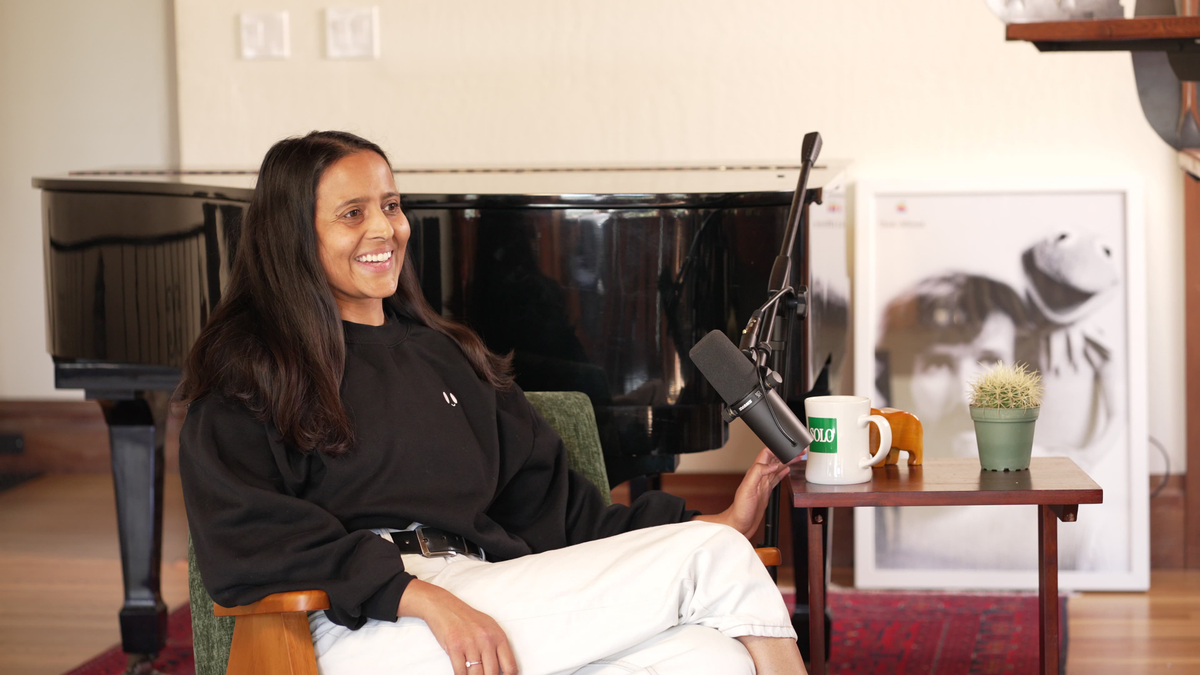
She left Google to build her own AI agent. | Shivani Poddar, Wajo

Key Takeaways
- Agents fail at the last mile, and everyone knows it. "The agent gets stuck — and the work falls on you." Shivani Poddar built Fo around the one claim no AI lab wants to make: AI can't do it all.
- Teach the model it's failing. Wajo's core technical bet is introspection before autonomy — "when you know that you're failing, then you know that you need help."
- The product had to build the company. Her V0 ran her own recruiting and investor scheduling: "If the product fails me, the company doesn't have a right to be successful."
- Humans in the loop is not a gig economy. Vetted domain experts, subtask delegation, and privacy-scoped handoffs — the human sees only what the task requires.
- Reference-check your investors. "Always ask investors to give you two intros: one founder who's doing insanely well, and one whose company shut down" — before you accept the money.
Listen: Apple Podcasts | Spotify
Introduction
Everyone in tech has lived the same thirty seconds: you hand a task to an AI agent, close the tab feeling like the future arrived, and the next notification is the agent handing the task back. A captcha. A phone call it can't make. A form it half-filled. Shivani Poddar has a name for the feeling — "if I wanted to be a captcha monkey, would I get an agent?" — and an unusual amount of standing to joke about it. She built a social chatbot on Alexa back in 2016, built the assistant for Facebook Portal, and led engineering on Jules, Google DeepMind's autonomous coding agent. Then she left, went solo, and built Fo: the personal agent whose launch went viral this fall precisely because it inverted the industry's pitch. Every lab says AI can do everything. Fo is built on the admission that it can't — so when it fails, it hires humans.
In this conversation with Julian, Poddar lays out the thesis with the calm of someone who has been working on it for a decade, and the receipts of someone whose cap table — publicly — includes Vinod Khosla. What emerges isn't really a product story. It's an argument about trust, a field guide for leaving big tech without a co-founder, and one of the most practical fundraising segments the show has recorded.
The Captcha Monkey Problem
Poddar's diagnosis of the agent market starts from fatigue, not capability. People came to personal agents "with this dream of just giving it things to do," she says, "and not finding that it goes all the way." Her fix required teaching models something they're not trained for.
"We've had to teach the models that they're failing. When you know that you're failing, then you know that you need help."
That introspection unlocks the controversial half of the product: when Fo hits something it can't do, it escalates to a human. Not a Craigslist stranger — Poddar is emphatic that "it was insanely important for us not to have a gig economy setup." Wajo interviews and contracts domain experts, then scopes what they can see: the human gets the captcha, or the one call, never the whole task or the user's data. She calls it subtask delegation, and it's the difference between an agent with a safety net and a mechanical turk wearing an AI costume.
Give the Agent a Phone
The other bet a big lab wouldn't take: Fo makes phone calls.
"I wanted to give the agent a phone. You know, if you're failing, just call somebody. About 40% of the world is not digitized yet."
The engineering problem turned out to be social, not technical. A person who answers a call from an AI has no reason to stay on the line, so Wajo had to design for the receiving end — disclosure rules, natural turn-taking, strict limits on what the agent will reveal to a stranger who might be fishing. And the market responded in a way she didn't predict: businesses that engage with AI callers started getting discovered. An insurance executive found her on LinkedIn to say her agent had been calling his company — and to ask how to keep it coming. A makeup artist treats Fo like a new Google, answering every call it makes and beating competitors who only ever optimized SEO.
The use cases that stuck are nothing like the demos. Before launch, Poddar deliberately seeded early access away from Silicon Valley — "contractors in Ohio, or somebody in India" — and found that nobody cares about restaurant reservations. They care about the calls that eat a day: a man in Florida used Fo on his Medicaid application; someone else had it call ten doctors' offices to schedule an emergency colonoscopy.
The Product Had to Build the Company
The solo-founder mechanics of the story are just as deliberate. Poddar's V0 was a scheduling agent, and she pointed it at the highest-stakes calendar she had: her own.
"This is going to be the product that helps me build my company. If the product fails me, then the company doesn't have a right to be successful."
Every early recruiting conversation and investor meeting ran through the agent. The hiccups weren't fatal; they were the roadmap. The recruiting itself became its own lesson in constraint: she joked at Google that she could hire anyone in the world, then discovered that a stealth startup with no name gets no replies. Her answer was taste over volume — no cold hires, handwritten first messages, and an opening DM that is three words long: "Want to join a rocket ship?" It pulled founding engineers from the Jules orbit — and, in the next wave, builders from Gemini CLI — out of Google, into a company structured — with a deliberately oversized employee equity pool — so the first team "should feel like we're all going to the moon together."
Married to the Cap Table
Poddar raised, but on her own clock. She put her own money in first, and she screens investors the way most founders screen executives.
"Always ask investors to give you two intros: one of a founder who's doing insanely well, and two, a founder whose company shut down."
Before accepting a check — that's the point. The shut-down founder tells you who an investor is when things break. It's the kind of diligence that explains why she describes cap-table decisions as marriages, and why the one name she'll share publicly is Vinod Khosla. What she actually asks of investors is refreshingly unromantic: not vision, but compute introductions when scaling demands it, and the "real, real view — not the honey-glazed view."
The Case for Going Solo
Julian closes with the show's customary two-parter. Poddar's bear case is unsentimental: founding "never really gets easier," and a solo founder carries unique stresses alone — you have to be "an island that can self-regulate." Her bull case comes from the founders she studied before starting: people who didn't begin solo, survived brutal co-founder breakups, and rebuilt alone.
"I'd never be against having a co-founder. But I'd never rush into it just because I wouldn't want to do it solo."
The arithmetic that settles it, for her: "The cost of not making that dream come true is way higher than the cost of learning how to self-regulate." Julian's send-off compresses the whole episode into four words — don't defer your dreams.
About Shivani Poddar
Shivani Poddar is the solo founder of Wajo AI, maker of Fo — the personal "action agent" that calls, emails, and coordinates with real people to finish tasks AI alone can't. She has been building personal agents since before the category had a name: a social chatbot on Alexa in 2016, the assistant on Facebook Portal, and engineering lead on Jules, Google DeepMind's autonomous coding agent. She left Google to take the bets a big lab wouldn't — giving the agent a phone, and putting vetted humans in the loop — and Fo's September 2026 launch became one of the most talked-about agent debuts of the year. Her backers include Vinod Khosla, Jeff Dean, and Gokul Rajaram.
Subscribe to the Solo Founders Podcast on YouTube, Apple Podcasts, or Spotify.
Join our newsletter for weekly insights from solo founders: solofounders.beehiiv.com