Anthropic Acquired a One-Person Biotech Startup

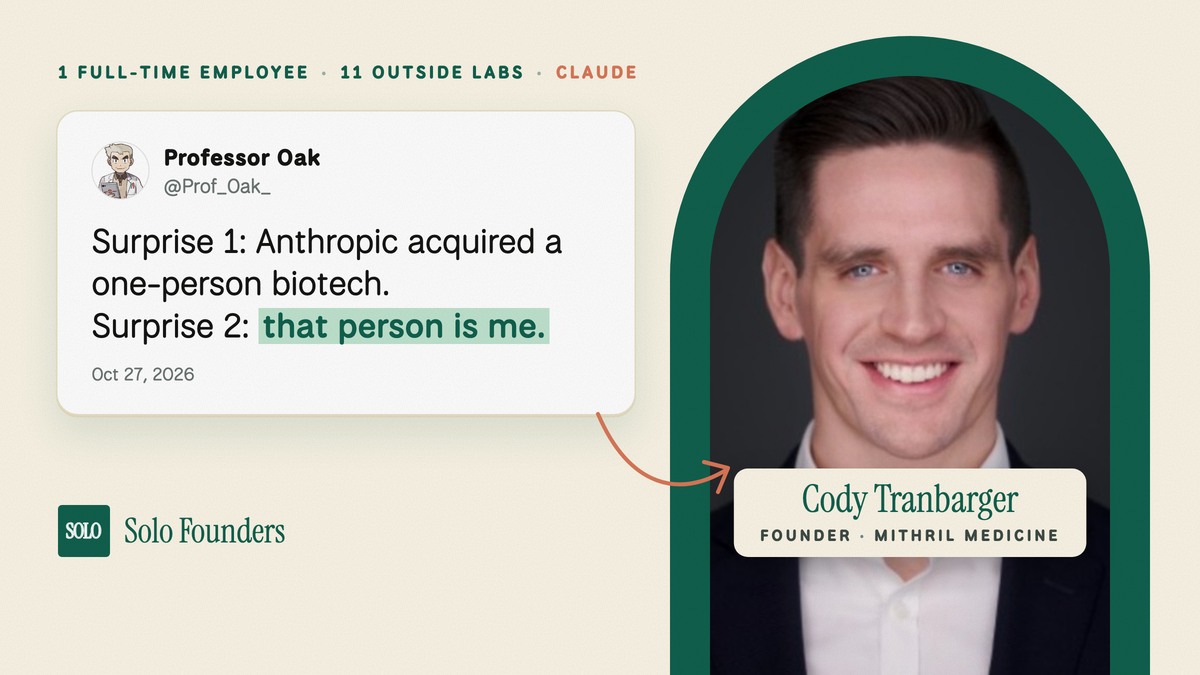
"Surprise 1: Anthropic acquired a one-person biotech. Surprise 2: that person is me."
For six years, Cody Tranbarger posted about drug development on X as "Professor Oak," without ever saying who he was. On October 27, he ended the anonymity with the post above.
Cody is the solo founder of Mithril Medicine, a biotech developing treatments for two rare childhood forms of muscular dystrophy. Anthropic acquired it in July. The terms weren't disclosed.
Before the deal, Mithril had one full-time employee: Cody. The rest of the work was done by part-time consultants, 11 outside labs, and Claude. With seed money from Atlas Venture, Mithril took a possible treatment from an idea to promising early results in mice in less than 18 months.
The main disease Mithril targets, LAMA2-related congenital muscular dystrophy, is brutal. In one London study of 42 children with the most severe form, only one walked on their own. There is no approved treatment that changes the course of the disease.
If the drug candidates hold up, Mithril aims to start human trials as soon as late 2028.
Cody has never done a podcast or a long interview. But his reveal post, and the 38-page technical report Anthropic published alongside it, give us a glimpse of how he ran a biotech startup as a solo founder. A lot of it will sound familiar to anyone building a company with AI today.
Claude handled everything around the science
Most of the attention on AI in drug discovery goes to the idea that it will design molecules faster. Cody thinks the bigger opportunity today is somewhere less glamorous:
"Rather than timeline acceleration & compression, I see orchestration & parallelization as today's low-hanging fruit. Most drug hunters see a handful of go/no-go calls in a career, & spend entirely too much of the rest trading emails (my inbox can attest)."
A biotech without its own lab runs on outside contractors. Every experiment means scoping the work with a lab, negotiating contracts, shipping materials, chasing results, and passing data from one vendor to the next. Anthropic says this kind of logistics often held Mithril back, and it's where Claude saved Cody the most time.
Anthropic is clear about the limits: "Claude can't make cells grow or mice age any faster. But with the logistics handled, one person can test more ideas in parallel, and make better decisions along the way."
The time savings show up before any lab work starts, too. By Cody's estimate, turning the first idea for a new drug program into a detailed thesis, design plan and experimental strategy took two to three days with Claude. Without it, he thinks it would have taken one to two months.
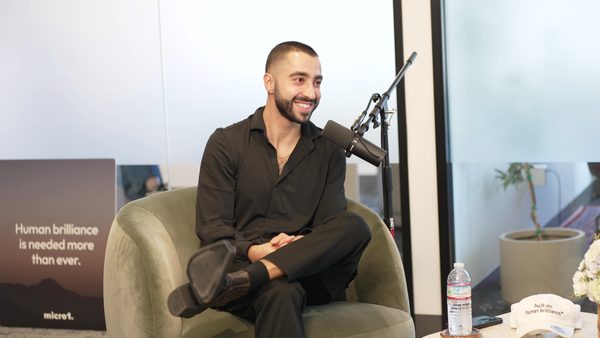
Ben Cera, the solo founder of Polsia, told us on the Solo Founders Podcast that every new company will have to work this way:
"If you have a new company and you don't make it 80% autonomous, meaning 80% of the operations and engineering and marketing just like day to day is not done by AI, you will be cooked."
Claude did the work. Cody made the calls.
The most useful part of the technical report is a close look at one week of Mithril's operations, when lab data arrived and had to be turned into a single plan across five contract research labs.
On day 4, one lab sent a 341-page data package covering 113 antibody designs. Claude read every page and proposed a next step for each design in under 8 minutes.
Claude recommended running one more round of testing on all 113. The team challenged the plan, and Claude defended it. The team overruled it and set aside 24 of the designs. Four minutes later, Claude had updated the plan, the run order and the unsent emails to the labs to reflect the decision.
Over the whole week, Claude drafted 17 emails, and the team sent 12 of them, each after editing. The report puts the rule plainly: "Claude sent no email."
It also doesn't hide Claude's mistakes. The team examined six errors in detail, and at least three made it into emails that went out to a lab. One was fixed within a day. The report's conclusion on the division of labor: "The judgments remained with us."
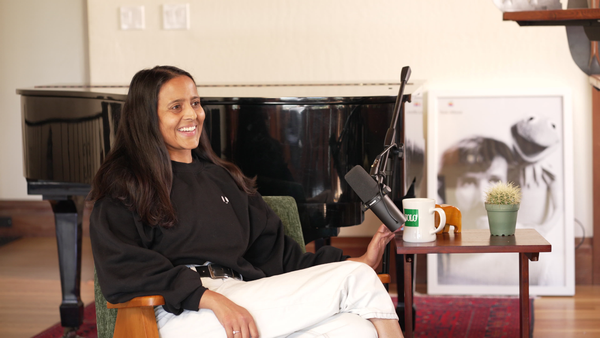
Claire Vo, the solo founder of ChatPRD, runs her company with nine AI agents and describes the same split on our podcast. As she puts it, "agents are just management." Her AI assistant, Polly, works under rules a lot like Cody's:
"She has instructions on when she's allowed to send emails and when she has to check with me."
Ben Cera described the part that stays with the founder: "The 20% is taste, creativity, direction, sort of like just like guiding the AI towards something that's meaningful to other humans."
Team size stops limiting the work
The more Mithril ran on Claude, the less Cody saw it as a small company and the more he saw it as a new way to work. In his words, Mithril became an experiment "to find the upper bound of how far it could scale as a single operator + a bunch of Claude (+ a stellar bench of part-time consultants)."
Anthropic now calls the model "Pipeline-in-a-Person": one scientist directing several drug programs at once, with Claude keeping the records, coordinating the outside labs and keeping work moving. Mithril's two programs became Anthropic's first in-house drug programs, and Anthropic calls Mithril "the first test of whether the model works on real programs."
Cody gave his reason for joining in his reveal post: "the chance to start several more programs, & find out how many one person can actually run in parallel."
The report makes the same point about the week of lab data. Claude handled the work that grows as a project gets bigger: reading, calculating, drafting and tracing every decision through each step that depends on it. That "suggests that the size of a screen need not be limited by the size of the team that directs it."
Francis Davidson built Sonder into a public company with more than 1,000 employees. Now he's the solo founder of Odessia, and on our podcast he described the problem Cody is trying to solve:
"I really dislike that organizations tend to scale output as a log of headcount. I'd rather it be linear, if not super-linear."
In most companies, each new hire adds a little less than the last. Cody is betting that if Claude handles the work that grows with each program, one founder's judgment can stretch across many more programs than it used to.
What to take from it
Anthropic's post makes the case for why this matters most in rare disease: "For ultra-rare diseases, where it is rarely feasible to pay a conventional, full-sized team, that could decide which medicines get made at all."
That's the real stakes of Mithril. A drug for a disease this rare may never get made if it needs a full-sized team. A solo founder working with Claude, a bench of consultants and outside labs might be able to make it.
You don't have to be developing antibodies for this to apply. Cody's setup is a useful template for any solo founder:
- Hand Claude the work that grows with the size of the project: reading, coordination, drafting, keeping records.
- Keep the decisions, and the send button, for yourself.
- Check the small details in Claude's drafts, not just the big decisions.
Mithril's stated goal is for the children born with LAMA2-CMD today to be the last who grow up without an approved treatment. It started as a biotech with one full-time employee. We'll be watching.
Liked this? The Solo Founders newsletter goes out every week with stories like this.
Solo, together.
Kieran
Sources
External Reporting and Interviews
Cody Tranbarger (Professor Oak) on X: the reveal post
Anthropic: Early progress on accelerating drug development with Claude
Anthropic: Mithril Medicine technical report (PDF)
R&D World: Anthropic buys Mithril Medicine, a one-person biotech
Solo Founders Interviews
80% AI, 20% Taste: Ben Cera on the Future of Solo Founding / YouTube