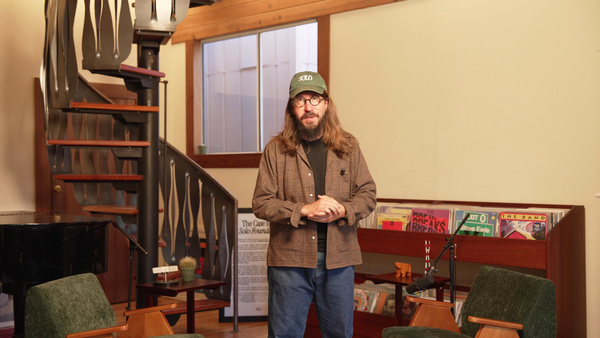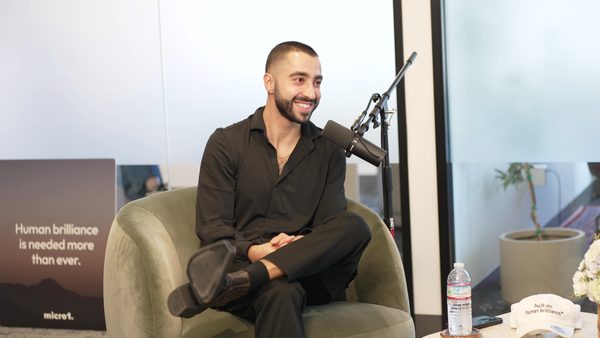
The Internet is Under Attack. This Solo Founder is Defending It. | Chai Choudhary, Workers


Key Takeaways
- "The tests are written by agents… they don't know." Ask the average engineer what an agent-written test suite checks and, Chai Choudhary says, the answer is a green check. That gap is what Workers IO is built for.
- "Nobody's buying code." When agents write, review and test the software, what customers pay for is the guarantee that it works. The whole market tilts toward verified software.
- "Those ten users can have, like, 10,000 agents." Agent traffic drags million-user edge cases into tiny companies, so the reliability floor is rising for everyone.
- "I never wanted to marry a solution." Two ideas killed fast (travel in about a month), and four or five wrong shapes of the right idea, before Workers IO landed. He got there from a late start: a first computer at about 16, and "I didn't use internet till I was in college."
- "It can be incredibly lonely." A blunt bear case from a founder who still says the answer should be "default solo".
Listen: Apple Podcasts | Spotify
Introduction
Chai Choudhary grew up in a village in Rajasthan so small it doesn't have a proper name. In that part of India, he explains, settlements with fewer than a hundred people are named after the canal that runs past them. He didn't touch a computer until school, when he was already about 16. Even then, programming meant writing code on paper during the week and waiting for the one hour the lab was open to run it. He lost that hour when the school found out he'd been installing small keystroke-capture tools on the lab machines and reading everything his classmates typed.
He didn't use the internet until college. The fastest connection he knew of in 12th grade was at a friend's house, where downloading a movie took three days.
He now runs Workers IO, a company that drops mission-critical software (databases, payment systems, infrastructure) into deterministic simulations and searches millions of failure scenarios for the exact conditions that break it. He built it solo, for a world where engineers increasingly ship code they didn't write and don't fully understand.
Nobody's Buying Code
The episode opens on the problem, and Chai states it plainly. "Now is the first time I feel," he says, "where people are slowly going away from the understanding that they have on their own codebase."
That used to be fine at the bottom of the stack. Nobody worries whether their CPU works. It was verified and has survived decades of workloads, and engineers can build on it without understanding it. What's new is that the top of the stack is going opaque too. "Every single line of code now being generated, it's mostly generated by agents. It's being reviewed by agents. The tests are written by agents. If you ask an average engineer what's in the test? They don't know." The test suite is a green check.
Agents also break the old scaling story. A startup used to be able to ship something fragile because it only had ten users. "Now those ten users can have, like, 10,000 agents." An edge case that once surfaced a few times a year now surfaces every hour, even for a company with a handful of customers.
That leads to Chai's conclusion:
"Nobody's buying code."
"If they're buying a database," he says, "they're buying the reliability that it will not lose our data." Formal verification gives you that guarantee mathematically, but it means maintaining a specification that drifts from the code and "looks like math problems" to most engineers. Workers IO's deterministic simulation testing runs on the code teams already have, written by them or by their agents, and turns verification into a compute problem. When customers have run it, it has turned up issues in places nobody was even looking. Postgres, one of the most battle-tested databases there is, wasn't the target, but it was part of one customer's stack, and it surfaced issues. "None of them were very serious," Chai says. "But it shows one of the most well-tested systems out there has issues. And what does that say about your system?"
"The entire software market is going to be the market for verified software."
The Wrong Lesson From Early Success
The first company came fast. At university, Chai teamed up with a friend he'd met on Facebook to make regional video for people across India who were getting online for the first time and found nothing made for them. The first skit drew 200,000 viewers in a week and made the news. That early win taught him the wrong lesson.
"I had this false idea of how hard it should be. I thought you just start things and they just work."
"The next time I did it," he says, "it was very painful."
The second lesson cost more. The team pivoted to an interactive-video product, struggled, and sold the business "right before internet became free in India." What they sold "for like pennies" became, in Chai's words, "one of the most expensive IPs that exist." The mistake, he says, is one most founders make at their biggest decisions: "They think of everything as, like, this is as good as it ever will be."
He came to the US for a research project at Harvard Law School, then spent years as an engineer at startups, including On Deck, where he and Julian were coworkers. He deliberately built savings first. "If I'm going to attempt it the next time, it doesn't matter if I raise money or not. I should be able to sustain myself for like a decade to see things through." The point wasn't comfort. Founders on a six-month clock, Julian notes, carry that clock into every decision.
Two Ideas, Killed on Schedule
When Chai finally started, verification wasn't the first idea. It was travel, a space he loved and had a following in. An AI travel agent died on contact with the economics: competing with Booking.com and Expedia, which spend billions on ads, turns into a commodity pricing war. An email client for travel advisors died next, because the pain wasn't sharp enough for anyone to pay.
Julian remembers hearing the email-client pitch as Chai joined the first Solo Founders cohort and thinking, I hope this idea changes. It did, because Chai had set kill criteria in advance. "If I see enough evidence this is not going to work, I'm going to change it," he says.
"I never wanted to marry a solution."
He was married to the problem instead, a problem he'd watched up close at a previous company: banks and healthcare systems that won't modernize because the legacy system has history. "Oh, but my system has been running for 20 years. Has your system run for 20 years?"
Even inside verification, he went through four or five shapes before the product clicked. The discipline that finally worked was building less. His first customer, shown a dashboard full of failures, asked a simple question: "Can you just give me an Excel sheet?" A week of dashboard work turned out to be unnecessary.
Default Solo
Chai's case for going solo is economic before it's philosophical. The equity he didn't split with co-founders let him hire an exceptional engineer he otherwise couldn't have afforded. Over a decade, he argues, the best early employees grow into co-founder-level owners anyway. Julian credits him with coining "solo together". You build alone, around people who will call you out when you aren't being honest with yourself.
He doesn't sell solo as easy. Asked for the bear case, he gives a blunt one: "It can be incredibly lonely. You don't have anybody to celebrate your successes with. If anything goes wrong, you are the only one to blame." If that sounds unbearable, he says, don't do it. But that's the only reason he'll accept. "It should be just default. Default solo."
"Everybody else should just start solo."
Watch the full conversation: [episode link]
About Chai Choudhary
Chai (Chaitanya) Choudhary is the founder and CEO of Workers IO, which builds deterministic simulation environments that stress-test databases, payments and other mission-critical systems and hand engineers and coding agents an exact, replayable failing case. He grew up in a village in Rajasthan, first used a computer at about 16, and started a regional-language media company in college. He later came to the US for a research project at Harvard Law School and worked as an engineer at startups including On Deck. He was part of the first Solo Founders Program cohort and built Workers IO solo.
Subscribe to the Solo Founders Podcast on YouTube, Apple Podcasts, or Spotify.
Join our newsletter for weekly insights from solo founders: solofounders.beehiiv.com
Building solo? Apply to the Solo Founders Program: solofounders.com/program