100k Users, Nine AI Employees | Claire Vo, ChatPRD

Key Takeaways
- The one-person company is real now. Claire runs ChatPRD as the only full-time human — bootstrapped, zero VC — with a staff of nine AI agents she manages like employees. One of them emailed the studio before she arrived.
- "Agents are just management." Her edge isn't a clever prompt; it's two decades running product orgs. She scopes nine specialized agents like a team, instead of one all-knowing bot.
- The model isn't the moat. Everyone called ChatPRD a "GPT wrapper." Her answer: "She may be a wrapper, but she's my wrapper." The moat is earned expertise and a founder people trust.
- The 20-year overnight success. You can't shortcut it: "Start five years ago building an audience, and 20 years ago building expertise."
- Authorship over ownership. She's done the VC game. This time the goal is a life, not an exit: "a 10x multiple on the revenue, but a 100x multiple on my happiness."
Listen: YouTube | Apple Podcasts | Spotify
Introduction
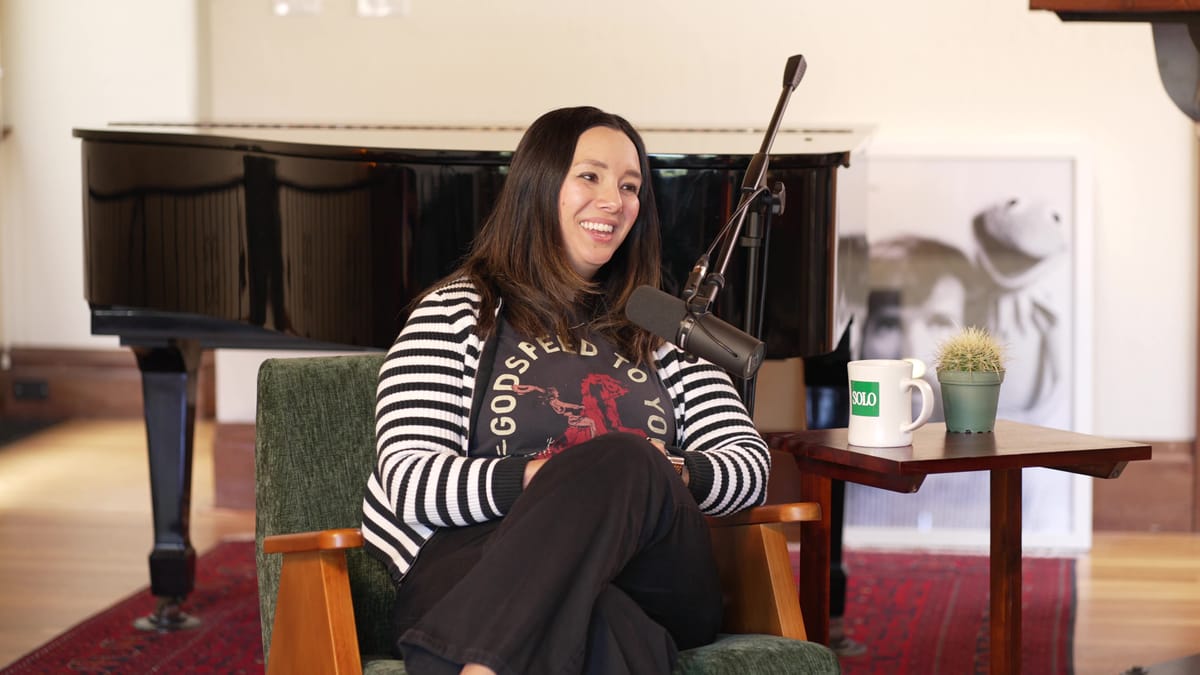
Ninety minutes before Claire Vo arrived at the studio, we got an email. It was from "Polly," letting us know Claire was stuck in traffic, apologizing on her behalf, and offering to reschedule. Polly is not a person. Polly is one of nine AI agents Claire employs to run her company — and that small, slightly uncanny moment is the whole episode in miniature.
Claire is the solo founder of ChatPRD, an AI "Chief Product Officer" that product managers use to turn vague ideas into sharp specs. She built it while holding down executive jobs — CTO of Color Health during the pandemic, then Chief Product and Technology Officer at LaunchDarkly — and still runs it as the only full-time human, fully bootstrapped, with no outside investment. What makes her a genuinely different kind of solo founder isn't that she works alone. It's that she doesn't: she runs a company the size of a small team with a workforce that's almost entirely artificial.
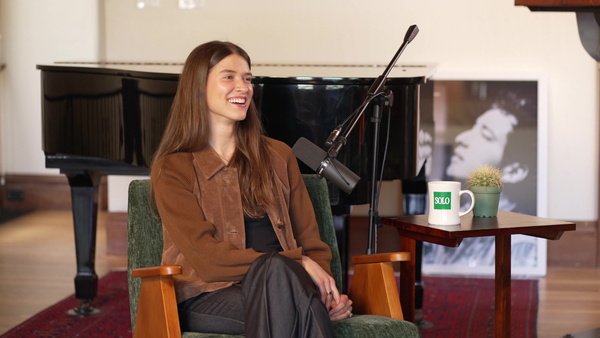
The conversation with Julian Weisser is the most concrete look the show has had at the "one-person company" — not as a prediction, but as a running system, and as a clear-eyed argument about why she built it this way.
A $12 Side Project That Refused to Die
ChatPRD started as a custom GPT. During the pandemic, Claire was running a large product and engineering org at Color Health and — despite the fancy title — frequently doing the PM work herself. When a teammate marveled that she'd produced a five-page, client-ready spec by noon, she delivered the line that became the origin myth: "Oh, sweet summer child — let me introduce you to this thing called ChatGPT."
Her team wanted in, so she packaged the prompt into a shared GPT in ChatGPT's marketplace, where it made exactly zero dollars. So she ran her oldest startup playbook: put up a landing page and see if anyone will pay you a dollar.
"I don't have hobbies that don't make money. So I put a Stripe form in front of a free GPT and waited to see if anyone would give me a dollar."
They did. Her stated ambition was almost comically small — "if this buys me a glass of wine a month, I'm happy" — and then a glass became a bottle became a case. For two years she was a full-time executive by day and a solo founder by night, doing support tickets before and after work, until the only thing limiting growth was her own time. Then she went full-time.
"She May Be a Wrapper, But She's My Wrapper"
ChatPRD launched into the teeth of the "it's just a GPT wrapper" sneer. Claire never flinched.
"She may just be a wrapper — but she's my wrapper."
Her point is the most useful reframe in the episode: the model is a commodity, but the judgment encoded around it is not. Writing a spec inside ChatPRD is like sitting with someone who has twenty years of product leadership — and she's adamant she wouldn't have a business if a generic model could one-shot that same quality. The opportunity lives at the application layer, for people with an earned point of view about how a job should actually get done. The product wins on the expertise behind it; the brand wins because the founder and the product are visibly the same person.
It's also why she's allergic to chasing problems she hasn't lived. "I always start a company because I've experienced a nightmare, and I want to solve that nightmare."
Agents Are Just Management
The part builders will replay is how Claire actually operates. She doesn't run one giant, do-everything assistant. She runs a constellation of nine scoped agents, each with a name, an identity, and its own tools: Polly, her EA, with her own email and calendar access; Sam, a sales agent who works her inbound and books meetings; Findlay, a family assistant who coordinates with her husband on who's collecting the kids. People show up to meetings and ask if Sam is joining.
"Instead of one mega-agent, I made nine mini ones. Each has its own identity, its own tools — and they get better over time."
The framework underneath it is unglamorous and exactly right: she's not prompting, she's managing. Can I tell you your job? Can I give you the tools? Do I spend enough time with you that you improve? Two decades of running teams turned out to be the most transferable skill of all.
She's transparent about it — Polly signs her emails as an assistant — and pragmatic about accountability. Having once "held the ultimate pager" for large engineering orgs, she doesn't see the failure modes of delegating to agents as that different from delegating to humans. Either way, she answers for it.
The 20-Year Overnight Success
The most bracing moment is Claire's answer to the question she gets most: Claire, you bootstrapped it — why can't I? She doesn't pretend it's a repeatable trick.
"Start five years ago building an audience, and 20 years ago building expertise."
The reason she can run a company solo, with agents and no investors, is that she spent two decades accruing the expertise, network, distribution, and financial cushion that make it possible. It's the classic overnight success that took twenty years — and she's honest that the technology is now the smallest part of the equation. What gives ChatPRD its credibility isn't an investor's blessing; it's that the market already trusts her.
Authorship Over Ownership
Claire has played the other game — she raised venture capital for an earlier startup, Experiment Engine, and sold it to Optimizely. She chose this on purpose, and she's careful to say she isn't anti-co-founder or anti-venture; she's just a different shape of founder, a true lone wolf, optimizing for something most playbooks don't measure.
"There's a 10x multiple on the revenue — but there's a 100x multiple on my happiness."
That line lands harder when you hear where it comes from. She traces her clarity to a colleague's funeral years ago, where she counted how few people showed up from a 500-person company and realized what would and wouldn't matter at the end. What she's building is meant to serve her life, not consume it — and the new economics of AI are what make a smaller, owned, joy-shaped company viable in the first place.
The Case For — and Against — Going Solo
Asked for the bear case, Claire is unsentimental. The wrong reasons to go solo, she says, are ego ones — equity maximalism, or wanting to be the dictator of your own thing. "Everybody has a boss," she notes. "Mine is just my customers." And she's blunt about who shouldn't do it: people who aren't intrinsically motivated, those prone to shiny-object syndrome, and anyone with one deep spike but not the range to cover the whole business.
The bull case is the brand's thesis stated plainly: true ownership of your company lets you author the life you want. She can say no to customers she doesn't want, ship things that spark joy, and slow the whole machine down when she needs to — as she did at nine months pregnant last December. "And not a single agent complained," she deadpans, "because they weren't around." Julian's reframe is the one to keep: it's not about dictatorship. It's about authorship.
About Claire Vo
Claire Vo is the solo founder of ChatPRD, an AI "Chief Product Officer" for product managers that she runs as the only full-time human — bootstrapped, zero VC, with a staff of nine AI agents. Before it, she spent two decades as a product and engineering leader (CTO of Color Health, Chief Product and Technology Officer at LaunchDarkly) and sold an earlier startup, Experiment Engine, to Optimizely. She also hosts the popular AI podcast How I AI.
Subscribe to the Solo Founders Podcast on YouTube, Apple Podcasts, or Spotify.
Join our newsletter for weekly insights from solo founders: solofounders.beehiiv.com