Introducing Solo Grants: $100–$1,000 for Your Passion Project, No Strings Attached.

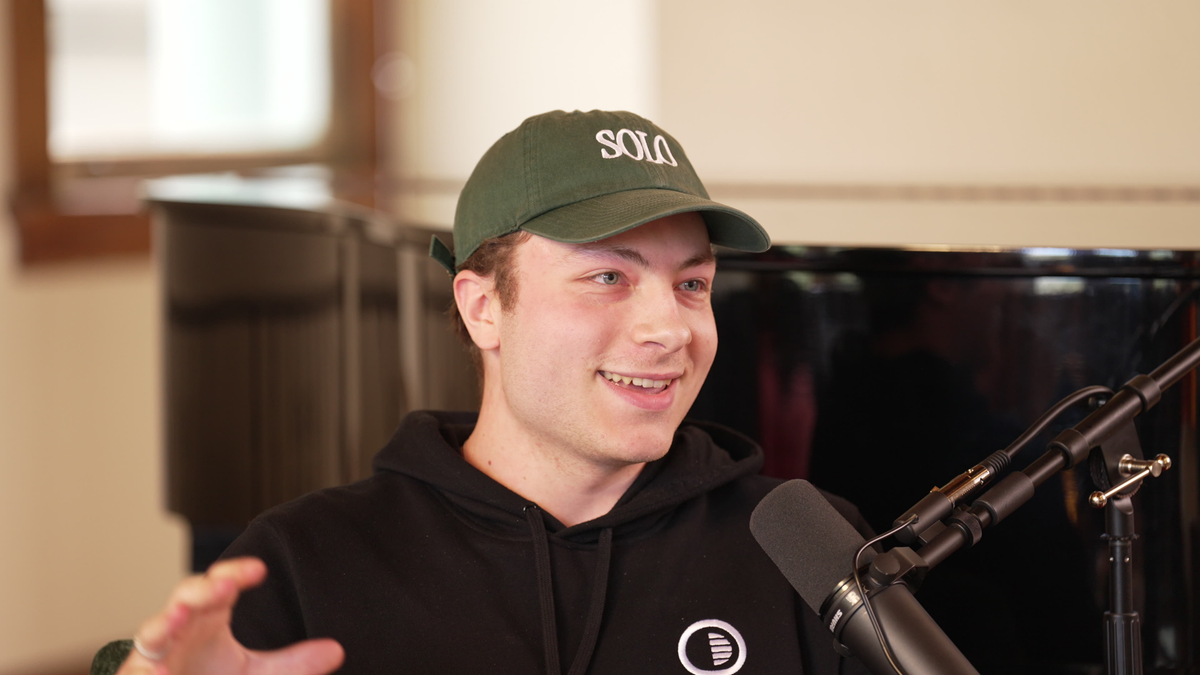
We believe the world's next great companies, discoveries, and projects start the same way they always have: one person, obsessed with something.
And we believe what stops them is rarely the start. Starting is free. It's seeing it through — the parts, the compute, the bills — that costs money. That gap is embarrassingly small. Usually a few hundred dollars, and one person saying it's worth doing.
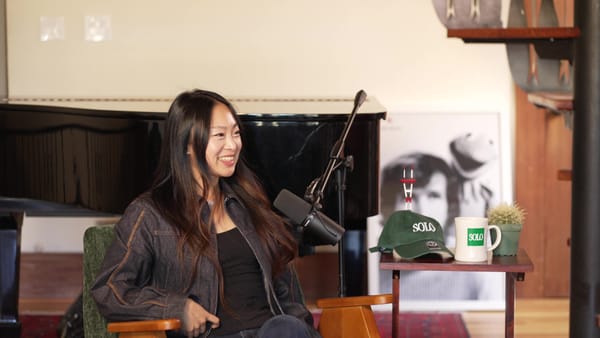
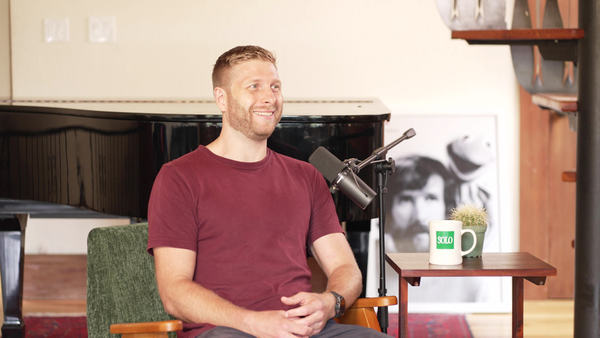
So today, we're launching Solo Grants: $100 to $1,000, 100% no strings attached, for people building technically ambitious projects solo. On this week's episode, Julian and I sat down to make the announcement and tell the whole story — where the money comes from, who it goes to, and why a program this small keeps producing outcomes this large.
Listen: YouTube | Apple Podcasts | Spotify
What a Grant Really Means
The word "grant" gets abused. Programs attach equity, rights to invest, milestones, reporting requirements — and still call it a grant. Our definition is simpler, and it's the one I gave Julian on the show:
"It is 100% no strings attached. That's what a grant really means."
No equity, board seat or repayment of any kind. And, this is the part that surprises people, no requirement that the project ever becomes a business. As Julian put it on the episode: most of the time, it isn't one. Venture is a great model for people who explicitly want to build venture-scale companies. But when you're exploring — remixing technologies, chasing something genuinely novel — running every decision through "how does this become profitable?" kills the exact quality that makes the work worth funding.
Some of the best businesses we've covered on this show started as what Julian calls quaint ideas: projects that looked almost laughable until, years later, they didn't. You don't find those by hunting for startup ideas. You find them by funding curiosity and getting out of the way.
The Proof: An Airtable Bill and Three New Viruses
We've been doing this for the past two years under the name Merge — more than 50 builders funded, all of them started with a thousand bucks or less. One of our first grantees was building the world's largest database of phage viruses. When we read his application, we noted the amount he was asking for. By the time we got on the call — a few days later — he'd found a way to need about $100 less.
What he actually needed was his Airtable bill covered. That's what was hosting the images and data on every phage in the database. So that's what we funded.
Later that same year, he discovered and named three new viruses. Other grantees have gone on to deploy wildfire-prediction systems in California and Texas, and to raise $10M to bring machine learning to chip design.
"The cash was incredible as an unblocker. But the belief, in and of itself, was equally substantial."
That second sentence is the part people miss about microgrants. I know because I've been on the other side of the check. My first grant was $500, in high school, from a founder we'd bumped into — he'd just sold his company, we told him what we were building, and he asked one question: what's blocking you right now? The money unblocked the project. The belief is what stuck.
The Funder Who Said "Be More Ambitious"
Later, working on a biotech project, I applied to Emergent Ventures. I expected to defend my budget. Instead, Shruti Rajagopalan's team pulled the threads the other direction: why aren't you flying out to India? Why aren't you going the extra mile? Why don't you give this the attention — and the money — it deserves?
They gave me more than I asked for.
That inverted everything I understood about funding. The best microgrant programs don't just fill a gap — they raise the ceiling. Julian's version of the principle on the episode:
"Make a start. Don't wait around for money if you can make some progress. But do not put a cap on your ambitions."
Solo Grants is built to do both jobs. We write our own checks, and we run a directory of the wider microgrants world — 1517's $1,000 checks, Emergent Ventures, O'Shaughnessy Ventures, the Thiel Fellowship lineage — so that if we're not the right fit for your project, we route you to the program that is. The space has been siloed for years; we've watched two people build nearly identical projects, funded by two different programs in the same state, with no idea the other existed. That's the other half of what we're fixing.
Nobody Looks for a Passion-Project Co-Founder
Here's the observation that made this a Solo Founders program and not just a grants program. Running Merge, we noticed something we never selected for:
"A lot of them were building projects for the first time — and it did not even occur to them that they should go out and find a co-founder."
The co-founder default is startup lore, not how creation actually works. As Julian put it: the world is a series of passion projects, and when people are in the passion-project frame, nobody thinks "I need a passion-project co-founder." It's the tinkerers and the explorers — someone alone at the typewriter, the easel, the workbench. Collaborators show up later, if they show up at all.
That's the thesis of everything Solo Founders does, showing up unprompted in a population of grantees who'd never heard the pitch. Solo, in community: you work on your project alone, alongside people doing the same.
How to Apply
If you're building something — or you've hit the part that costs money — apply. Grants run $100 to $1,000, no strings attached. If we're not the right program for your project, we'll route you to the one that is. And browse the grantee showcase while you're there; the projects are the best argument we have.
Apply and browse the directory: https://sologrants.com
About Ari Dutilh
Ari Dutilh is a co-founder of Solo Grants (formerly Merge) alongside Julian Weisser, with Kai Goodall rounding out the team. He got his start building online communities as a teenager — Buildergroop, and the 40,000-member Photography Lounge, the largest photography community on Discord — and received his own first grants from a founder he bumped into, then 1517, then Emergent Ventures. He also runs production and media for the Solo Founders Podcast and works on interviews and admissions for ODF.
Subscribe to the Solo Founders Podcast on YouTube, Apple Podcasts, or Spotify.
Join our newsletter for weekly insights from solo founders: solofounders.beehiiv.com