The Co-Founder "Blood Bond" Is a Myth | Michael Grinich, WorkOS

Introduction
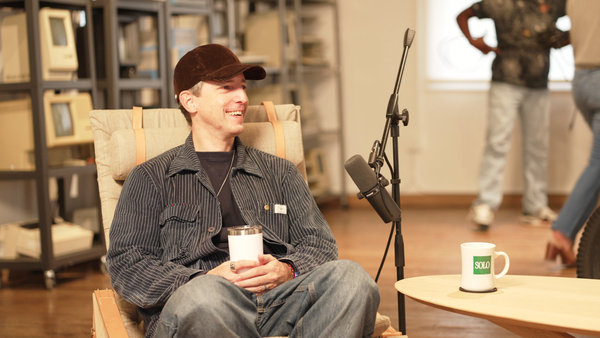
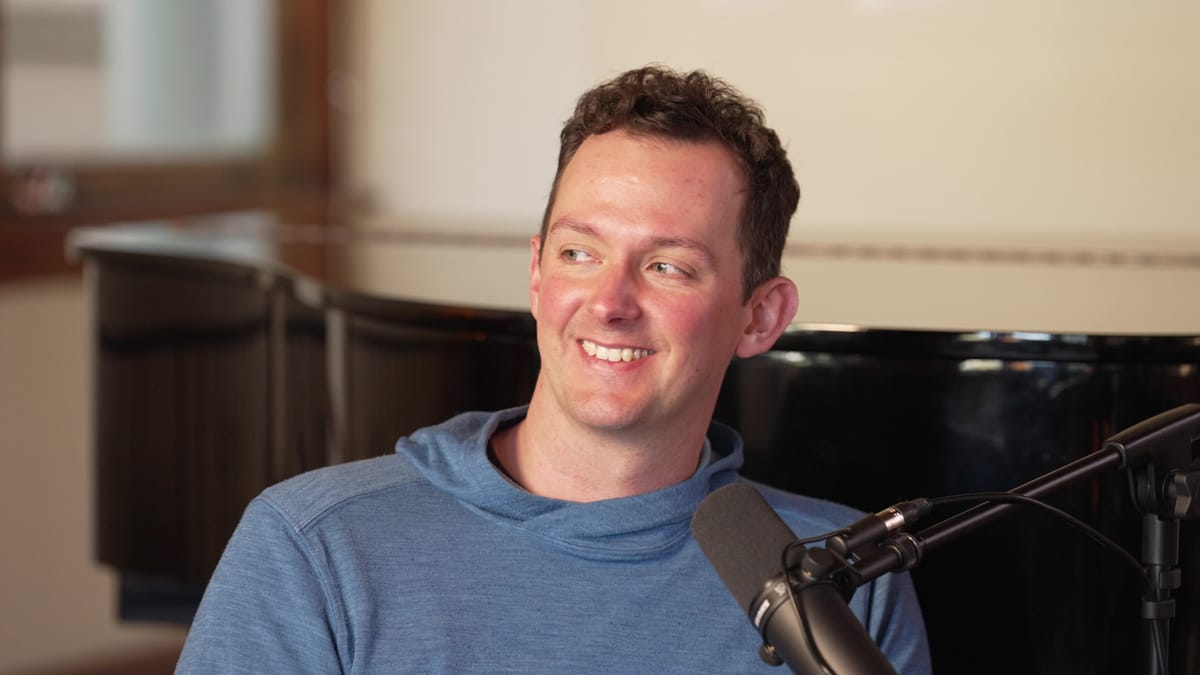
The conversation with Michael Grinich starts without an intro. He and Julian just sit down and go — Michael only realizes at the end that they never recorded a proper open. It's a fitting accident, because Michael doesn't deal in preamble.
He is the solo founder and CEO of WorkOS — the infrastructure layer that makes a startup enterprise-ready, the SSO and directory-sync and audit-log plumbing that lets a small company sell to a large one without rebuilding its identity stack from scratch. It is, today, a company valued at $2 billion, and the quiet enterprise layer running underneath OpenAI, Anthropic, Replit, and a long list of the companies defining this moment in software. He built it with no co-founder.
So when Michael says the thing nearly every founder is told they need is mostly a story we tell ourselves, it carries weight he's earned the hard way:
"It's not the blood bond it was made out to be."
That's the spine of this conversation. Not a complaint about co-founders, and not a victory lap for going solo — a clear-eyed argument that the ride-or-die framing is wrong, that the real question is a different one entirely, and that the answer changes how you build everything.
"It's Not the Blood Bond"
The myth Michael is dismantling is the one where co-founding is a marriage — two people, ride-or-die, until the end. He doesn't think the data supports it.
"Look at many of these companies with multiple co-founders — Facebook had four. Asana, Dustin. It's very, very hard to find a stable matching of multiple people together over long periods for leadership. The most common outcome for companies with multiple co-founders is that years in, there's one person still running it."
He reaches for an analogy that's become a small running joke in the founder world: the Acquired podcast is named that because acquisition is the most common outcome for companies. The most common outcome for multi-founder companies, he argues, is the same kind of quiet consolidation — one person, years later, still holding it. That doesn't make co-founders bad, and he's careful not to belittle anyone. It makes the blood bond framing inaccurate.
The Real Question Is "Are You the One Who Holds It Forever?"
The reframe is the most useful thing in the episode. Most founders argue about the wrong question — do I need a co-founder or not? Michael thinks that's downstream of something more fundamental.
"If you're going to start a business, the question to ask is: are you the one who holds it forever? You can have co-founders or not — that's fine. But the real question is: is this the thing where I'm going to be the one who holds it? Because that's a very different perspective on how you build the company, how you make decisions, who you hire."
It's the difference between a job and a calling — "almost like the art and the artist." When people co-found, he notes, not everyone is making that level of commitment, and that's normal; some people genuinely don't want that relationship with their work. But someone has to. "There needs to be at least one person who is."
The Founder "Mental Disorder"
Why does it have to be one person? Because the thing that actually drives a company forward, in Michael's telling, is closer to a compulsion than a job — and compulsions don't split cleanly.
"When I hang out with other founder-CEO types, I almost feel like we all have the same mental disorder. You can't stop thinking about it. It'd be like sitting down with Miles Davis and asking, 'When do you stop thinking about music?' The person is the expression."
He's quick to say this isn't aspirational. "I actually don't think it's the healthy way to work." Not everyone has it, and not everyone needs it. But it has a sharp implication for team formation: if you do have co-founders, it might be best if only one of them carries the obsession.
"If you have two people who both have it and they fall out, it explodes. There's only room for one CEO at Meta. Full stop."
Solo by Consequence, Not Principle
Here's the part that keeps this from being dogma: Michael wasn't ideologically solo. He was open to a co-founder. The company just outran the search.
"I was always open to having co-founders. I just got started so fast — as soon as I had the idea, I raised money, hired people, and the snowball started rolling very quickly. I didn't have anyone waiting in the wings."
And crucially, the decision fell out of what he chose to build. He selected the problem first. WorkOS is software APIs sold to developers — "kind of like selling to your friends" if you're in that community — a domain where he had no enormous skill gap to fill. The need for a co-founder evaporated as a consequence.
"If I'd been building a very different product — hardware, or electronic medical records, where it requires relationships and sales with hospitals and medical systems — I absolutely would have stopped and not started the company before finding a co-founder. But for WorkOS, I selected the problem first, and not having a co-founder kind of fell out of that."
That's the honest version of the solo argument. Not "never take a partner," but "know whether the thing you're building actually requires one — and know whether you're the one who holds it."
The Skill He Was Sure He Didn't Have
If you need proof that going solo forces growth, Michael offers the cleanest example in his own story: sales. For roughly a decade he was certain he could not do it — a CS grad who'd internalized the "hire the sales guy" trope as fact, with no data. Then an investor told him the real reason they'd backed him: you'll out-sell anyone you ever hire. He thought it was ludicrous.
"Sales is the ultimate distillation of the company's value to the market. It's like writing your jokes and performing them on stage."
He calls the thing a founder can do that no hire can replicate the founder pixie dust — the company lives inside you — and he took WorkOS to tens of millions in ARR closing deals himself before hiring his first head of sales, a couple of months before this recording, as a partner to ride shotgun with rather than a function to offload. It's a side door into the same theme: solo means there's no one to defer to, which is either crushing or the most liberating forcing function there is.
How to Pick Something You Never Have to Pivot
WorkOS exists because Michael spent about eighteen months not building anything. He carried a notebook in his back pocket — he still has it, ripped to shreds — and wrote one idea per page, refusing to filter for whether it was a good business. The discipline came from comedy: Steve Martin's Born Standing Up, Seinfeld, the working comics at the Comedy Cellar trying material and bombing. Most of what you produce is garbage; the act is the selection.
Then he ran the survivors through four filters: a unique lived experience the market hadn't priced in; an enormous, expanding market ("you can't outrun a small TAM" — Uber is the transportation market, not the taxi market); a fit with his own skills so he could move fast; and timing tight enough to show something working inside twelve months. Enterprise auth won. "IT — it seemed gross and old, and it hadn't had its Stripe moment yet."
"The thing I'm most proud of about WorkOS isn't the technology. It's the formation of it as a business."
The reason that mattered so much to him is an unfashionable view of the alternative:
"Pivots are the most traumatic thing possible to do to a business. If people romanticize them, they should not."
He separates iteration from pivoting. Killing a feature that doesn't work is courage. Changing why you exist on a whim is a signal to your team, your customers, your investors that they can't know who you are. His model for what to build instead is the institution — The Lion King has run on Broadway for more than twenty years through different owners and managers, ten shows a week, its only job to keep being The Lion King. Stay firm on the why; stay flexible only on the means.
Bear Case, Bull Case
Asked for the honest bear case of going solo, Michael doesn't reach for a tactic. He reaches for John Lennon. The thing you give up is the partnership — the deep, generative, occasionally combustible bond of building with someone — and he admits a real pang of envy watching others have it. The other half is plainer and darker: it's brutally hard to get started alone, and not because anyone's fighting you. "Nature is indifferent, but it's still very dangerous," as Julian puts it. Nobody cares. You can be the limiting factor on a perfectly good idea, burn out, and never try again.
The bull case is the inversion, and it's where the episode ends. The company becomes a mirror.
"It shows you every imperfection and weakness, all the time. It's inescapable. It's like an adaptive video game on top of your life."
If you want the accelerated personal transformation, solo is the most concentrated dose available. And the thing you build is uniquely, unsharably yours — an institution that can outlive you, grown from what he calls a secret: "something that only one person knows. At the very beginning of the company, that's it." He closes on the only argument that finally matters to him: you get one life and one shot. Why not swing as hard as you can?
About Michael Grinich
Michael Grinich is the founder and CEO of WorkOS, the API platform that makes software enterprise-ready out of the box — single sign-on, directory sync, audit logs, and authentication — so startups can land large enterprise customers without rebuilding their security and identity stack. WorkOS is his second company and the first he designed deliberately, after a first startup he describes as a technology in search of a business. He built it solo. Eight years in, WorkOS is around 120 people, does tens of millions in ARR, recently raised a $100M Series C at a $2B valuation, and is the enterprise infrastructure behind companies including OpenAI, Anthropic, and Replit.
Subscribe to the Solo Founders Podcast on YouTube, Apple Podcasts, or Spotify.
Join our newsletter for weekly insights from solo founders: solofounders.beehiiv.com