Solo Founders in 2025: Why One Third of All Startups are Flying Solo

For decades, the conventional beliefs have been clear: you need a co-founder. Y Combinator practically mandates it. VCs view solo founders with the same suspicion they reserved for some hardware startups or edtech companies. A founder flying solo is a often considered red flag, a sign of someone who couldn't convince anyone else to join them in their mission.
But they are wrong. Solo founders may be considered odd, but they are the future.
In our report featuring exclusive data from Carta, solo founders now start 36.3% of all new companies — more than one in three. This is the first time this has happened in over 50 years of startups.
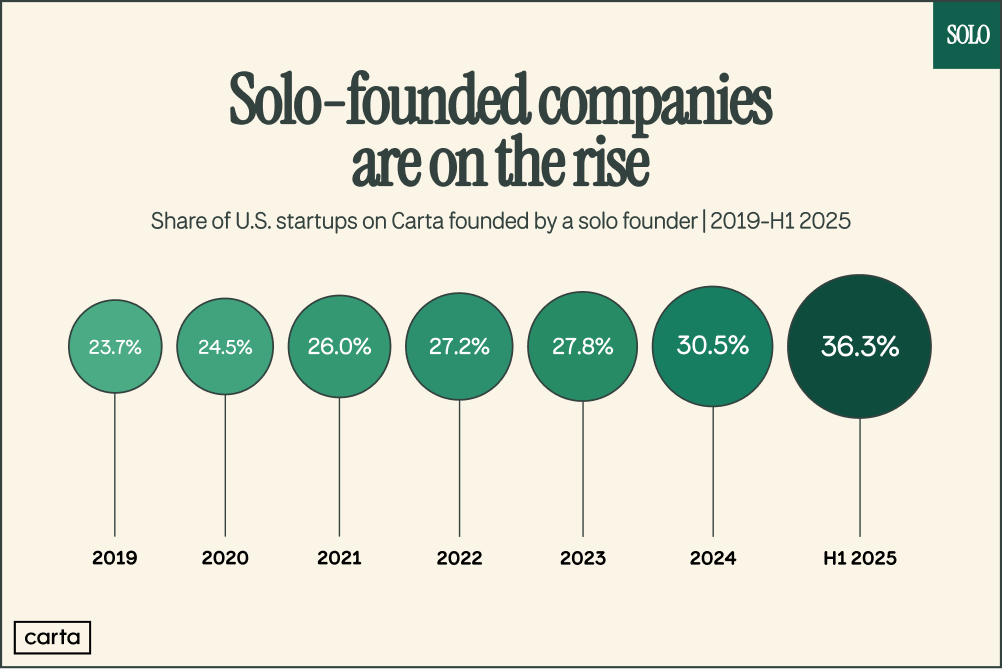
This isn't a blip or an anomaly. It's been a steady increase since 2019, when solo founders accounted for less than a quarter of new startups. As Peter Walker from Carta observes, a 13-point shift in just five years represents a massive environmental change in how companies get built.
The question isn't whether this trend is real — the data is unambiguous. The question is why it's happening now, and what it means for the future of founding.
AI as The Unlock
The most obvious catalyst is artificial intelligence. But not in the way most people think.
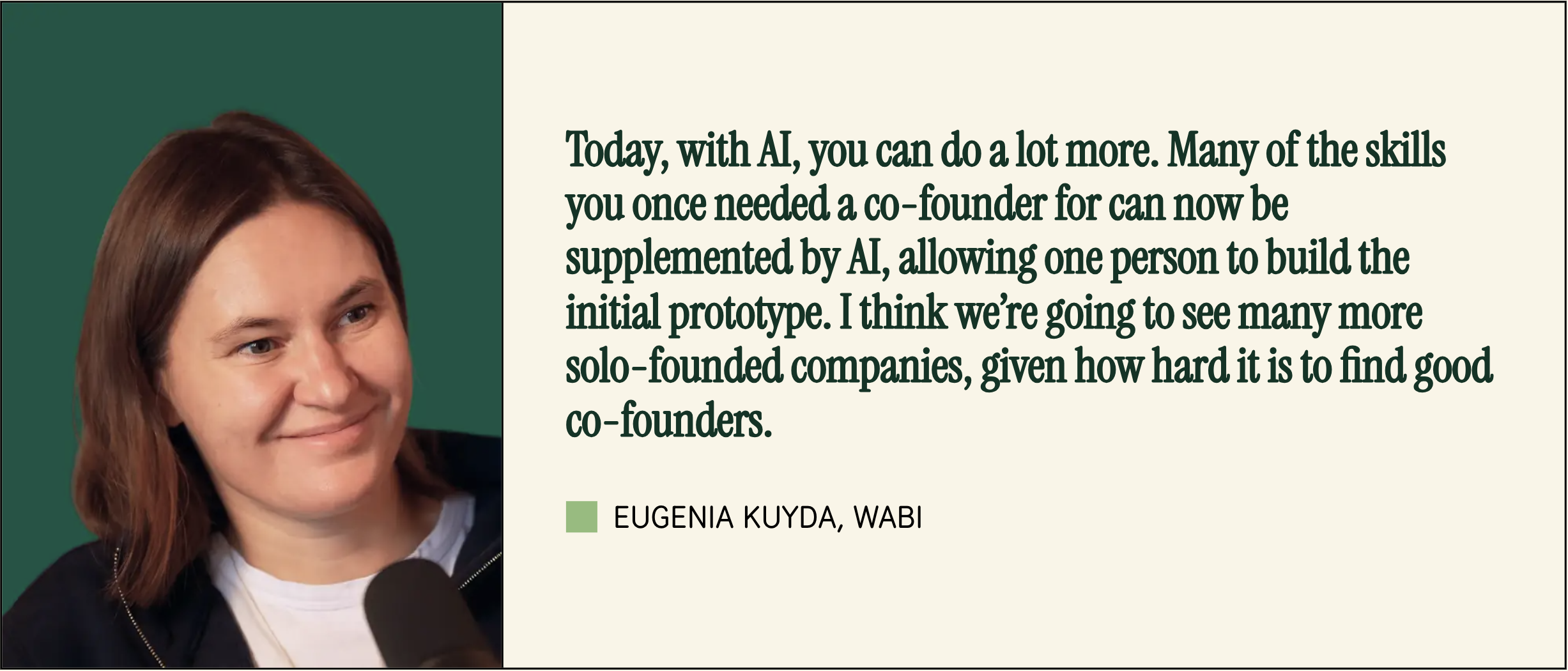
AI isn't just making solo founders more productive — it's fundamentally changing what productivity means for a single person. Where a solo founder in 2019 might have needed weeks to build a functional prototype, today's AI-assisted founder can ship in hours or days. They're not just writing code faster; they're simultaneously crafting marketing copy, designing interfaces, analyzing user data, and automating customer support. As Paul from Browserbase described it, solo founders are becoming multi-threaded more easily than ever before.
This isn't theoretical. Look at companies like Midjourney, built by David Holz without a traditional team structure, or Polymarket, where solo founder Shayne Coplan leveraged modern tools to build what would have required dozens of engineers a decade ago. These aren't lifestyle businesses or simple SaaS apps — they're category-defining companies competing with venture-backed teams ten times their size.
The tech stack available to today's solo founder would seem like science fiction to entrepreneurs from even five years ago. One person with ChatGPT, Cursor, and Vercel (another solo founded success) can now match the output of what used to require a designer, two engineers, and a marketer.
The Authorship Advantage
But technology alone doesn't explain why investors are suddenly comfortable backing solo founders. The real shift is philosophical.
Adeel Khan who's building MagicSchool, the fastest growing edtech company of all time, puts it bluntly: "A single decision-maker can move much faster than a committee." This isn't just about avoiding meetings. It's about maintaining what we call "authorship" — the cohesiveness that comes when one mental model permeates every aspect of a product.
When you use a product built by a solo founder, you can feel the difference. There's a consistency of vision, a clarity of purpose that's often diluted in committee-designed products. Jan Oberhauser's n8n feels like it was crafted by a single mind because it was. Every feature, every design decision, every piece of copy reflects one person's mental model of how workflow automation should work.
This coherence often times isn't just aesthetically pleasing — it's commercially valuable. In an era where products compete on user experience as much as functionality, the ability to maintain a singular vision throughout a product can be a decisive advantage.
The Geography of Independence
The gap between solo and multi-founder teams is widest in the Bay Area, where the pressure to find a co-founder remains strongest. Meanwhile, cities like New York, Los Angeles, and Seattle show higher rates of solo founding.
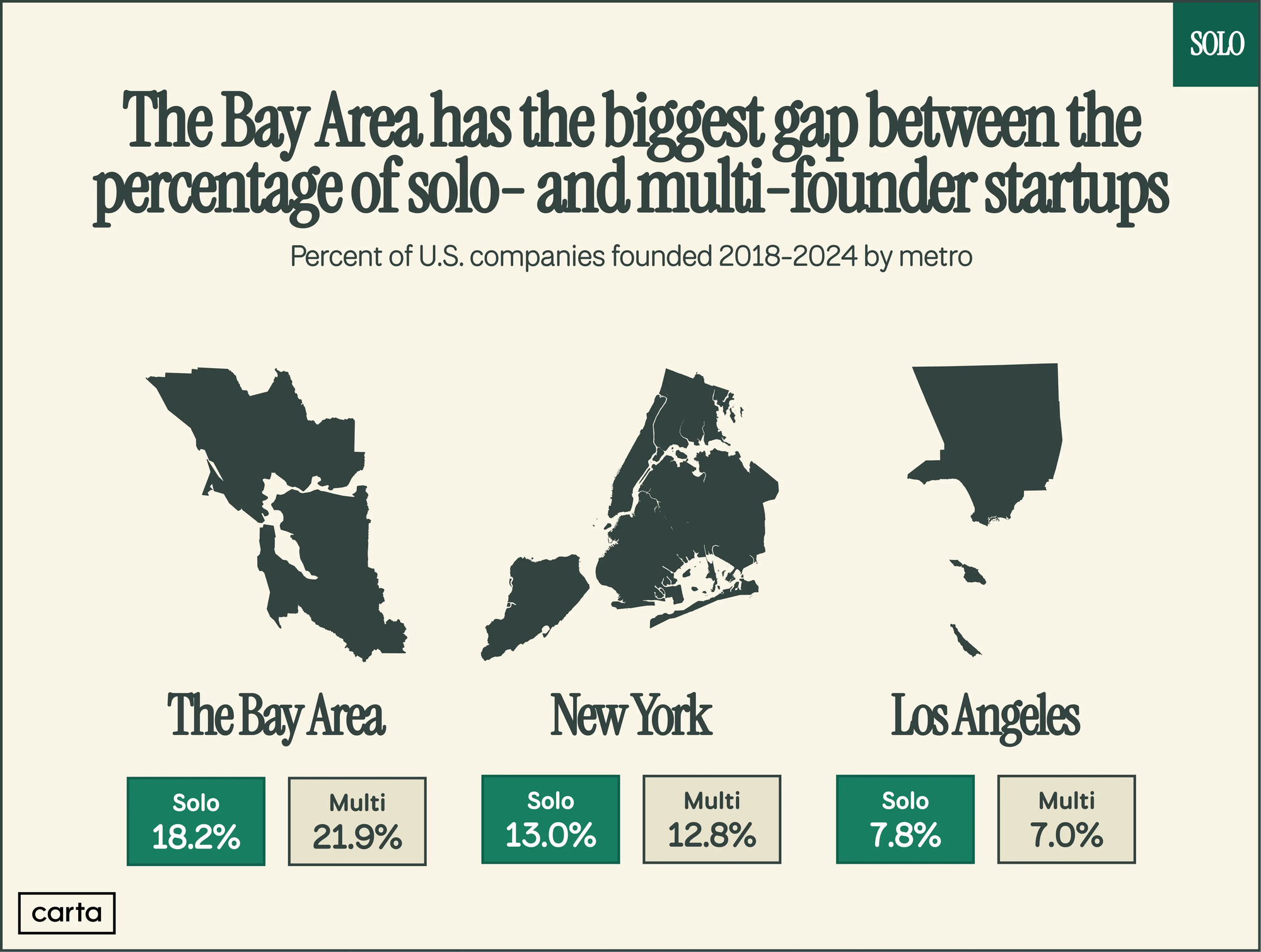
This isn't random. San Francisco's startup culture, for all its innovation, can be surprisingly conformist. There's a playbook — get into YC, find a technical co-founder, raise a seed round, hire from Stanford — and deviation is discouraged. The social pressure to follow this path is intense.
Compare that to New York, where the tech scene grew up alongside industries that celebrate individual achievement — finance, media, fashion. Or Los Angeles, where the entertainment industry has always understood the concept of the auteur. These cities foster what Zach Pogrob called "main-character energy" — the confidence to build alone.
- Zach Pogrob, Share Aura
Trading Risks
Critics of solo founding often cite the risk of burnout, the danger of blind spots, the loneliness of building alone. These are real concerns. But they ignore the silent killer that solo founders avoid entirely: co-founder conflict.
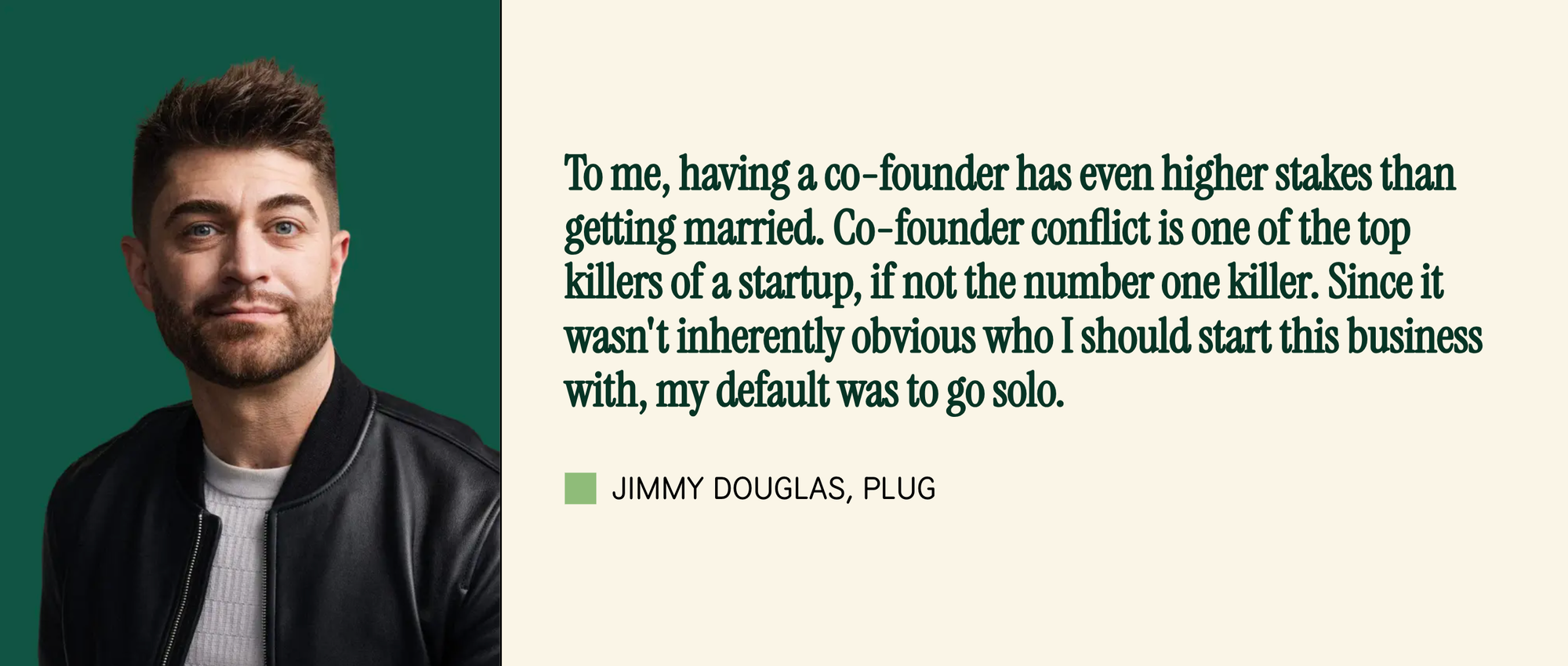
Julian's observation is worth repeating: co-founder breakups kill more startups than almost any other factor. When you build alone, you're trading the risk of partnership dissolution for the risk of isolation — a risk that can be mitigated through early believers and founding employees.
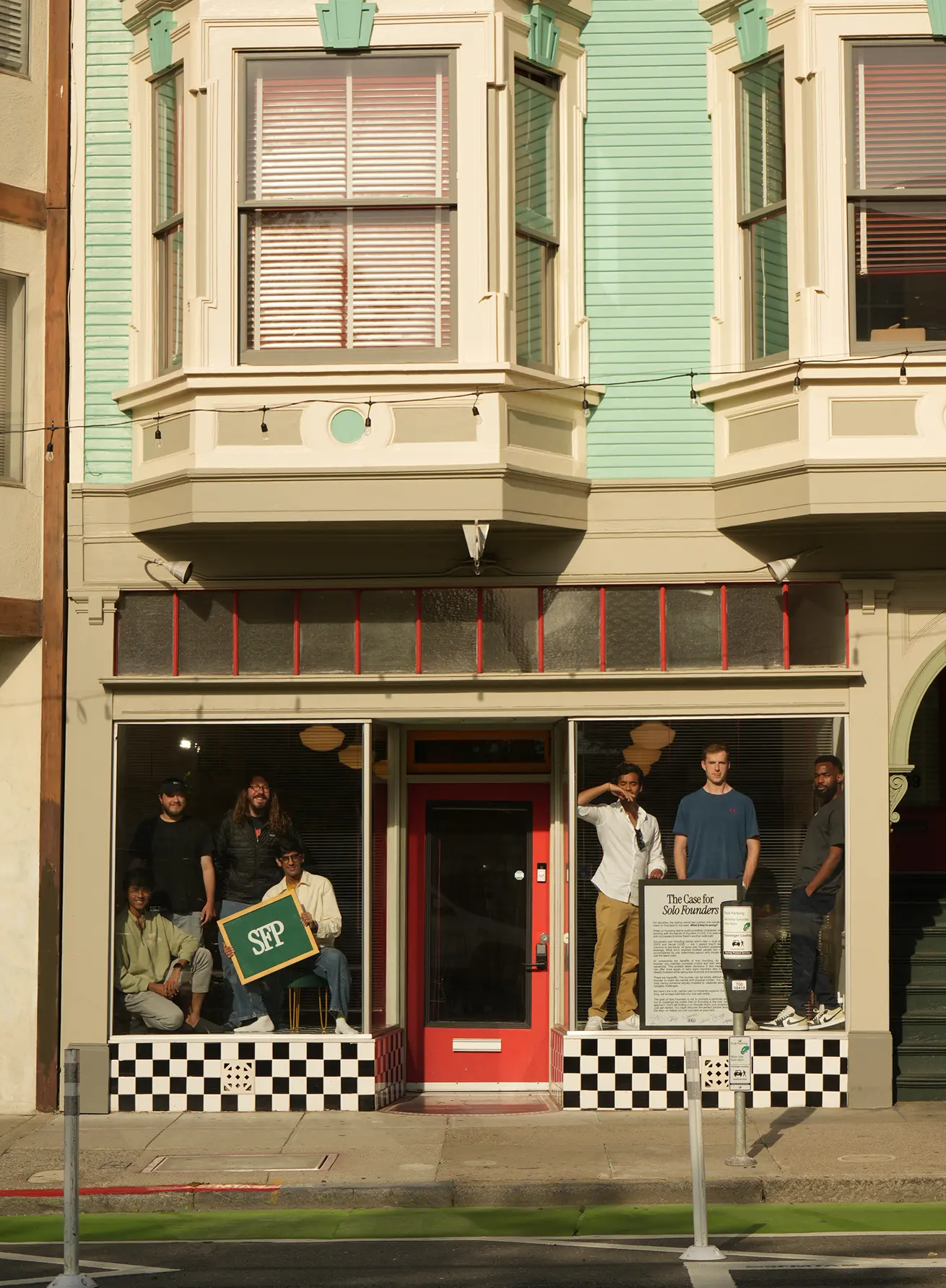
This is a big reason behind why we started the Solo Founders Program – the home for solo founders. We think solo founders should be able to build surrounded by other ambitious builders, just like co-founders. Participants in SFP have described the experience as "like having five other co-founders, all working on different things."
The New Normal
We're witnessing more than a trend — we're seeing a fundamental restructuring of how companies get started. Solo founding isn't necessarily replacing co-founding; it's becoming an equally valid path, chosen not out of necessity and more out of preference.
The implications extend beyond individual founders. If one person can build what used to require a team, what happens to the economics of venture capital? How do employee equity pools change when the existing equity isn't already split 50/50 by existing co-founders? What new types of companies and product building become possible when the founder can maintain complete creative control?
These aren't hypothetical questions anymore. With solo founders starting more than a third of all new companies, they're the defining questions of the next era of company creation.
To find the data, read the full State of Solo Founding or download it here. In the meantime, we'll continue sharing insights and excerpts of the conversations we've had with top-shelf solo founders for the report on Twitter, and soon, on YouTube.