How a solo founder turned a side project into a $2.5B workflow automation giant

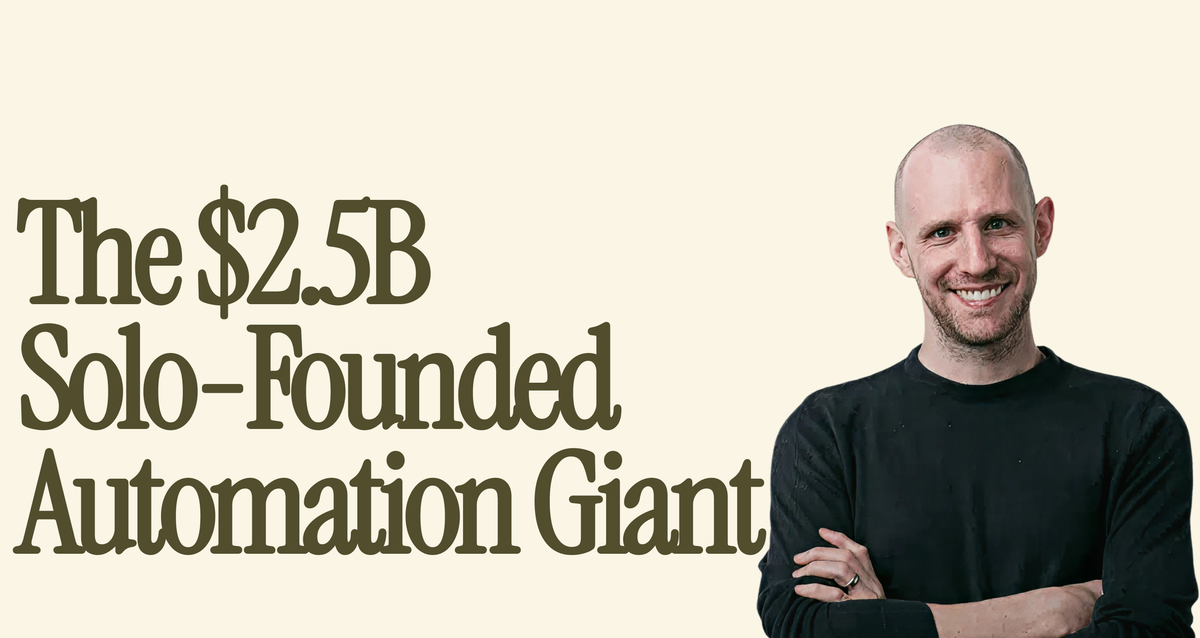
Six years ago, Jan Oberhauser was a solo founder in Berlin, frustrated by the complexity of workflow automation. He was hacking away on a side project. Today, that side project is now a European unicorn with a $180 million Series C announcement fresh off the press. n8n’s valuation jumped from $270 million to $2.5 billion in just the past seven months. A drastic transformation from open-source side project to AI automation power house. 10x revenue growth in 10 months, $40M+ in ARR, and a platform that 200k+ active users and 3,000+ enterprises now depend on daily.
But the real story isn't in the numbers — it's in how a single founder's quest for simplicity evolved into a tool reshaping how businesses work with AI.
The solo founder who started simple.
Oberhauser didn't set out to build a unicorn. In 2019, 4 years into building his startup link.fish, Jan found himself sitting on a frustration that wouldn't go away. Every time he wrote a script to automate something simple, the deployment overhead consumed hours. Documentation, error handling, SSL certificates, server restarts — what should take minutes stretched into half-day ordeals.
"Existing open source solutions were not up to the challenge, so I decided to build my own," Jan wrote on n8n's second anniversary.
On June 23, 2019, he published the first version of n8n to GitHub. He was a solo founder, with no team or contractors, just a visual effects artist turned developer solving his own problem. Within 5 months, the project reached 10k stars on GitHub. By November of that year, people worldwide were filing issues, submitting pull requests, and sending emails. Something was clearly resonating.
Building in public, backed by conviction.
What Jan built was different. n8n offered a visual, node-based workflow automation platform that developers could self-host with complete control over their data. This was a critical distinction in an era of cloud-only competitors like Zapier. More importantly, he co-created and popularized a "fair-code" licensing model (the Sustainable Use License) that kept the source code open while requiring any business seeking to commercialize the software to form a partnership with n8n. It was open enough to build community, restricted enough to build a business.
From the start, it was clear Jan treated community as foundational — the company’s first hire was a developer evangelist. That community-first approach caught the attention of Sequoia, which led n8n's $1.5 million seed round in March 2020. This was Sequoia's third ever seed investment in Germany. In April 2020, Jan could finally work on n8n full-time and hire his first team members, a huge step for any solo founder. A $12 million Series A from Felicis Ventures followed in April 2021, then a $60 million Series B from Highland Europe in March 2025.
But the real inflection point came when Jan made a pivot.
The AI bet that changed everything.
In 2022-2023, as AI began growing exponentially, n8n didn't just strap AI features onto existing workflows. Jan decided to reposition the entire platform as AI orchestration infrastructure — enabling users to build multi-agent systems, chain prompts, and connect any LLM to any tool without having to write Python. That strategic pivot is now paying off dramatically: according to recent investor updates, n8n's revenue has quadrupled in just the past eight months, following six years of steady building.
Today, 75-80% of customer workflows incorporate AI features. Companies like Vodafone (which saved £2.2 million in operational costs), Delivery Hero, and even the United Nations run mission-critical workflows on n8n. With 145k+ GitHub stars, it's now a Top 50 GitHub project that supports 700k+ active developers.
What $180M means for n8n
The Series C, announced this week, positions n8n for its next phase: leaning more into AI orchestration, expanding their engineering team, and the push to become "the default platform to build with AI."
For Jan, who started his career working on visual effects for films like Maleficent, the vision remains personal: "I started n8n to remove repetitive tasks and focus on what I actually enjoyed. Now I see a world where building with AI... becomes table stakes, just as using Excel is."
The solo founder blueprint.
Jan Oberhauser's story is a fascinating blueprint for ambitious founders, solo or not. It begins with identifying a problem to solve for yourself, embedding your personality and strongly held opinions into how you build it (fair-code licensing), prioritizing community over paid acquisition (the Github os community), and timing big pivots well (AI transformation). From side project to $2.5 billion company in six years – all started by one developer working late nights in Berlin, convinced there had to be a better way.
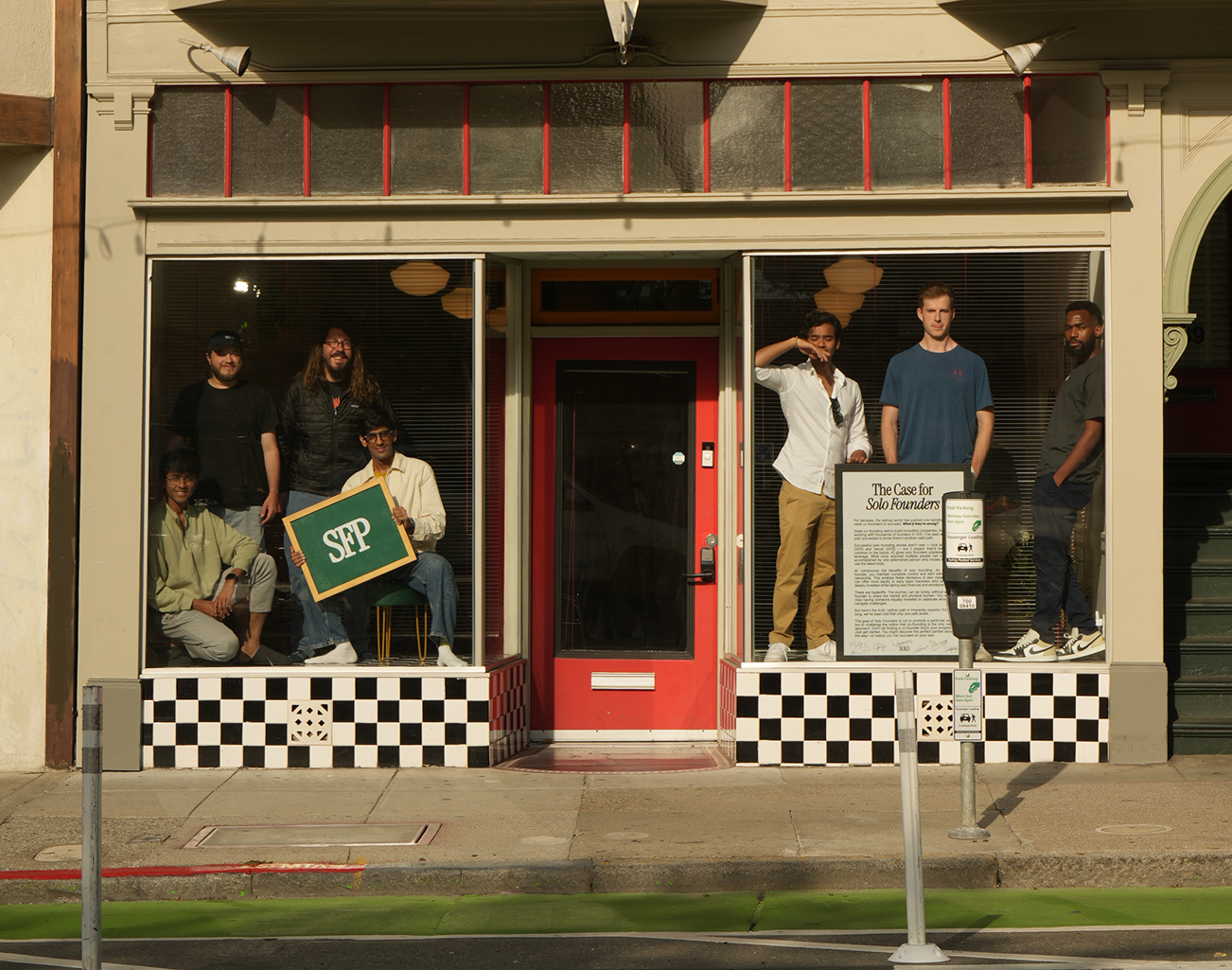
Solo Founders Program
Apply for our January Cohort
"I don't feel like a solo founder here. Here I effectively have five co-founders — available when it matters, while everyone still runs their own company."