Avoiding The Co-Founder Trap: Eugenia Kuyda on Co-Founder Myths and Why Authorship Matters
Solo Founders Podcast — Episode 4 with Eugenia Kuyda

Key Takeaways
- Most startups with "co-founders" still operate with one true decision-maker, and pretending otherwise creates confusion
- Bad co-founder matches are almost always worse than solo founding, especially when titles are assigned for optics
- Vision is rarely designed by committee – companies move when one person has conviction and takes full responsibility
- Solo founding is not solo execution: you can hire and delegate aggressively, while still keeping clear authorship
- Many founders pursue co-founders for emotional safety, investor signaling, or hiring leverage - but those needs can be better met without adding a co-founder.
Listen: YouTube | Apple Podcasts | Spotify | X
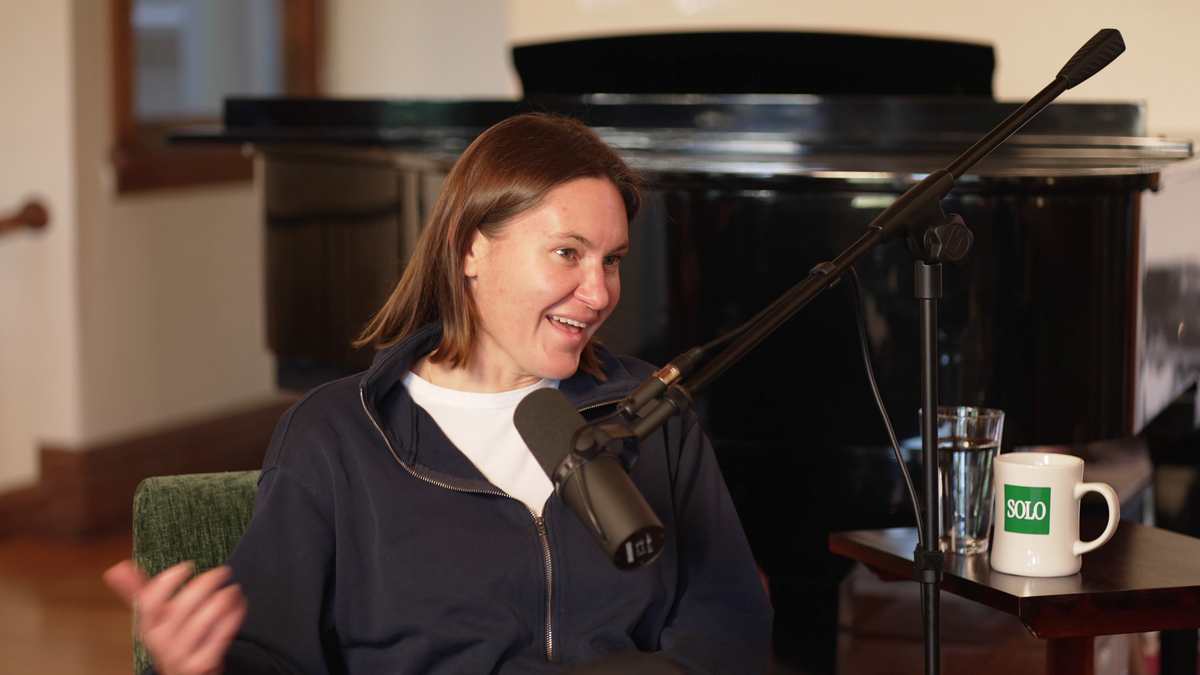
Eugenia Kuyda was a major player in defining consumer AI long before it became mainstream. She built Replika, one of the first widely adopted AI companions, and has operated through multiple AI cycles from early neural chat systems to today’s LLMs. After years in high-stakes, high-scale environments, she’s unflinchingly honest about a startup taboo: the co-founder myth.
Her argument is not that co-founders are bad, it's that most founders are solving the wrong problem when they chase one.
In this episode, Eugenia breaks down why so many "co-founder" relationships are really early employee relationships with inflated titles, why vision usually comes from one person's conviction, and why a bad co-founder dynamic can quietly drain years from a company. She also gets refreshingly candid about motivation, loneliness, and what it really takes to stick with a company when the odds are bad and the glamour wears off.
The Co-Founder Myth: One Person Usually Drives the Company
Eugenia's starting point is simple: in most companies, one person ultimately carries authorship.
"At the end of the day, someone needs to call the shots."
She points to the reality most founders already feel but rarely say out loud. Even in companies with multiple co-founders, decisions usually bottleneck through one person with stronger conviction, higher risk tolerance, and greater willingness to bear accountability.
That doesn't mean others aren't valuable, but it does mean that equal ownership in title often masks unequal ownership in responsibility.
"The buck always stops with someone."
This is where many startup teams get into trouble: they try to preserve an idealized image of equal leadership, while operating in practice with a single decision-maker. This mismatch typically creates friction, politics, and resentment.
Vision Isn't Built by Committee
One of Eugenia's sharpest claims in the conversation is that shared authorship is overrated as a design principle for early-stage startups.
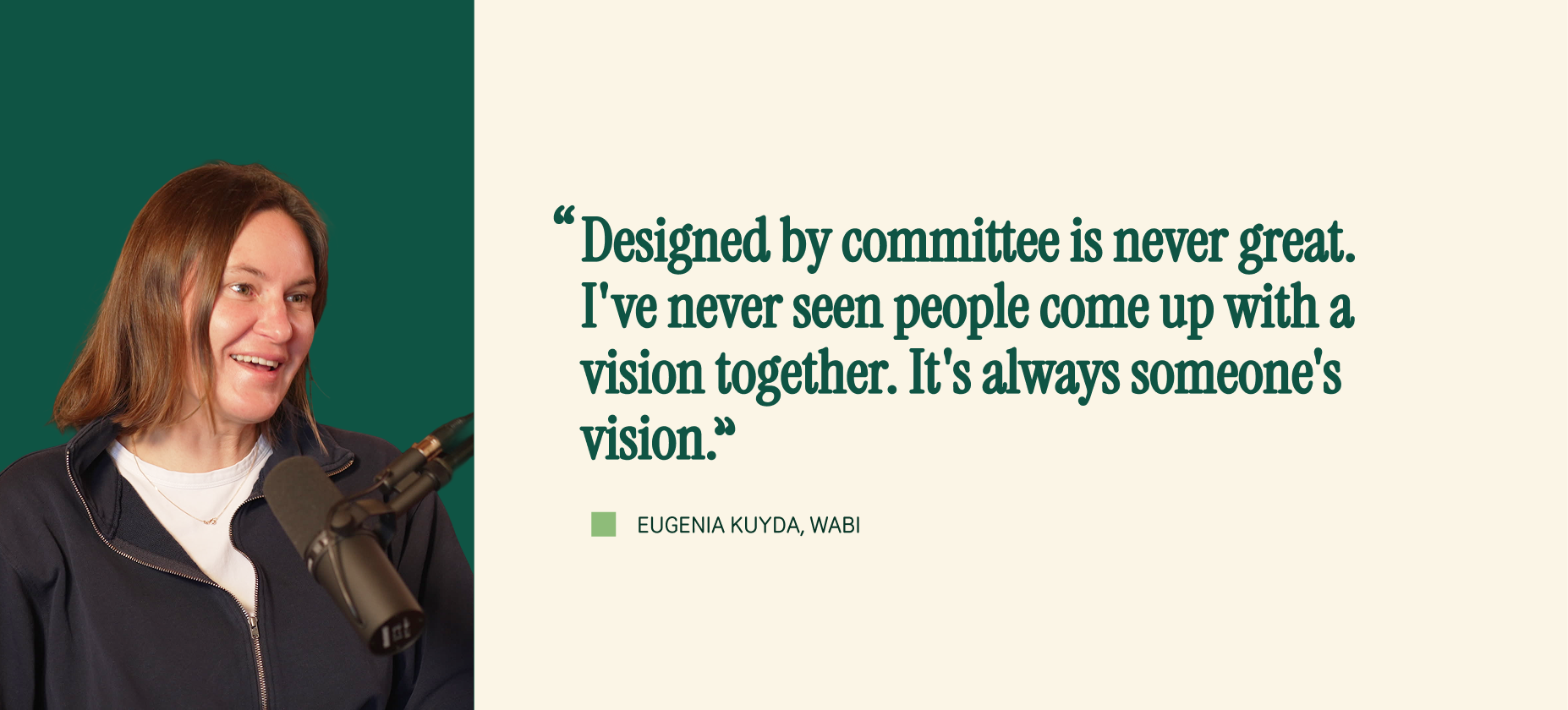
The point is not that teams shouldn't contribute — they should. But at the founding-stage, a company needs directional clarity, and clarity usually comes from one person willing to move first and defend choices under uncertainty.
This framing matters because many founders use co-founder structures to avoid the discomfort of decisive leadership. Co-founders can become a hedge against responsibility rather than a force multiplier.
Better Solo Than Wrong
Eugenia's most practical advice for early founders is direct:
"It's much better to be solo than to have bad co-founders."
She has lived the downside herself: assigning a co-founder title to improve fundraising optics, then paying the cost when incentives, trust, and decision rights were misaligned.
In her framing, this is a common failure mode in venture-backed ecosystems: founders feel pressure to present a certain team shape, so they retrofit one. But title inflation doesn't create alignment. It often creates entitlement, power confusion, and slower execution.
If someone is genuinely essential, trusted, and aligned long-term, make the structure reflect that. But if the real need is talent, hire strong early employees and compensate them well. Don't outsource decision authority by default.
The Layer Solo Founding Removes
One of the most unique insights Eugenia shared is structural: solo founding removes an entire organizational layer.
In many "normal" startup stacks, the flow is:
- Founder/CEO
- Other co-founders
- Early team
In a solo startup, it's often:
- Founder/CEO
- Early team
That sounds subtle, but it meaningfully changes decision flow. With a co-founder layer, founder conviction usually gets translated through internal alignment and negotiation before it reaches the team. Without that extra layer, direction goes straight from founder to execution leaders. The result isn't only speed – it's less governance ambiguity, fewer performative syncs, and clearer accountability across the org.
This doesn't mean co-founders are bad, but it does mean founders should treat team structure as architecture: if an extra layer improves outcomes, add it intentionally. If it adds latency without real leverage, remove it.
Why Founders Still Chase Co-Founders
Eugenia also gives a nuanced read on why this pattern keeps repeating.
For some founders, co-founders reduce loneliness. For others, it's signaling to investors. For others, it's a hiring lever: a hard-to-recruit person may only join with a top-level title and upside.
Those can all be valid reasons in specific cases. But she separates them from the core question: does this person truly share authorship and long-term responsibility for company direction?
If not, a co-founder structure may be solving a short-term emotional or tactical need while introducing long-term governance risk.
Motivation: The Uncomfortable Truth
A standout section of the episode is Eugenia's take on founder motivation.
She argues many companies don't start from pure mission. They start from external validation loops: impressing a parent, proving worth, winning status, or resolving some personal wound through achievement.
That doesn't disqualify the founder. But it does matter when deciding who to build with.
If your motivational engine is deeply personal, dragging someone else into an unclear emotional project can create hidden strain. Over time, either the motivation matures into intrinsic commitment — or the company fragments.
Her own path reflects that transition: what began with external fuel eventually became conviction in the product and the problem.
Solo Founding Is Not Solo Building
An important distinction in the episode: solo founding does not mean doing everything alone forever.
Eugenia repeatedly emphasizes teams, hiring, and execution. The practical model is clear authorship at the top with broad contribution across the org. One person owns final direction; many people build the outcome.
This is where her perspective is particularly useful for operators: she rejects both extremes — the myth that co-founders are mandatory and the myth that solo founders should be lone wolves.
The middle is authorship plus team sport execution.
Conviction, Timing, and Leap Decisions
Eugenia's entrepreneurial decision process is also instructive. She doesn't describe startup formation as spreadsheet optimization. She describes it as conviction that emerges after creating space: stepping back, turning down the noise so the right idea stands out, and then committing fully.
That style won't fit everyone. But it highlights a pattern many strong founders recognize: once conviction clicks, speed matters. Delay often comes from social scripts ("find a co-founder first," "get universal agreement") rather than strategic necessity.
The Solo Founder Tradeoff, Honestly
Eugenia doesn't romanticize the solo path. It's lonely, it's heavy, and the emotional load is real. But her central claim is that this burden is easier to manage than persistent misalignment at the founding layer.
A bad co-founder relationship doesn't just slow growth. It can poison culture, confuse strategy, and consume the founder's most finite resource: attention.
So the question is not "solo or co-founder" as identity. The question is structural fit: what setup gives this company the highest clarity, speed, and accountability over time?
For many founders, the honest answer may be solo — at least to start.
About Eugenia Kuyda
Eugenia Kuyda is a visionary founder in consumer AI known for building one of the first conversational AI products, Replika, and more recently, Wabi. Her work has focused on human-AI interaction, emotional interfaces, and consumer AI products long before the current wave made the category mainstream. Across multiple company chapters, she has operated with strong founder authorship and a clear thesis on vision-led execution.
Subscribe to the Solo Founders Podcast on YouTube, Apple Podcasts, or Spotify.